Print on Demand Copyright in 2026: What Sellers Can Legally Sell (And What Triggers Lawsuits)
Print on demand copyright is the body of U.S. law that determines which images, text, characters, and designs a seller can put on a product without a license. Original work is yours to sell, public domain content is free to use, and almost everything else requires a license from the rights holder. Sellers who rely on fair use as a defense rarely win — the four-factor test almost never favors commercial product sales. This guide covers what is safe to sell in 2026, which categories trigger the most takedowns and lawsuits, how the DMCA process works, and how copyright and trademark interact for POD sellers.
Understanding print on demand copyright matters before listings go live, not after a DMCA notice arrives. U.S. statutory damages range from $750 to $150,000 per work for willful infringement — and enforcement typically starts with platform strikes that damage entire catalogs before any lawsuit is filed. The risk is structural, not hypothetical.
This guide covers copyright basics, the 2026 public domain cutoff, high-risk design categories, fair use limits, trademark overlap, DMCA mechanics, and how to protect original designs.

Key Takeaways
- Copyright is automatic: original creative works are protected the moment they are created. Registration is not required for protection to exist, but it is required to sue for statutory damages in U.S. federal court.
- 2026 public domain cutoff is January 1, 1930: works published before that date are generally free to use commercially in the U.S.
- Statutory damages are serious: U.S. copyright law sets damages at $750 to $30,000 per work, and up to $150,000 per work for willful infringement, plus possible attorney’s fees.
- Highest-risk categories: movies, TV, music, sports logos, anime, gaming characters, celebrities, brand logos, and song lyrics — all actively monitored and enforced at scale.
- Fair use is a court defense, not a permission slip: the four-factor test rarely favors commercial product sales, and winning still requires major legal spend.
- Trademark and copyright are separate frameworks: a design can be copyright-clean and still infringe trademark rights.
- Enforcement usually starts with DMCA takedowns: platform strikes often damage stores before any lawsuit is filed.
Quick Reference: Copyright Risk Levels for POD Sellers
Use this table as a first filter before publishing a listing. It does not replace legal review, but it separates lower-risk design sources from obvious takedown targets.
| Design source | Risk level | Why it matters | Seller action |
|---|---|---|---|
| Original artwork | Lower | Seller controls the creative work | Keep dated source files and drafts |
| Properly licensed assets | Lower to medium | License terms determine what can be sold | Confirm commercial merchandise rights explicitly |
| Public domain works | Lower to medium | Copyright may be expired, but trademark can remain active | Document the source; avoid branding that implies affiliation |
| Fan art and character references | High | Entertainment IP is actively monitored and enforced at scale | Avoid unless licensed directly from rights holder |
| Brand, team, or band references | High | Trademark rights often apply even after copyright expires | Use original concepts with no implied affiliation |
What Print on Demand Copyright Protects — and What It Does Not
Copyright protects original creative expression fixed in a tangible form. For print on demand sellers, that means illustrations, photographs, graphic designs, paintings, book passages, song lyrics, poems, advertising copy, visual character likenesses, and distinctive logos. The protection is automatic — no registration required, no copyright notice required.
Copyright does not protect ideas, methods, or facts — only the specific expression of them. Short phrases, titles, names, and slogans are generally not protected by copyright, although trademark may apply. Common shapes, basic typefaces, standard symbols, U.S. federal government works (including many NASA photographs and Library of Congress materials), and public domain content fall outside copyright protection.
The automatic nature works in both directions. Original designs are protected the moment they exist. Someone else’s designs are equally protected — even without paperwork, registration, or a copyright symbol anywhere on the work. That symmetry is what makes print on demand copyright a catalog-level concern, not just a legal technicality.
High-Risk Design Categories: The Ones That Generate Lawsuits and Takedowns
The design categories that generate the most DMCA takedowns and lawsuits in print on demand are not subtle. Sellers attempt them because search demand is real — and the legal risk is equally real. The pattern across every high-risk category is the same: anything specifically recognizable from copyrighted media carries enforcement risk. The further a design moves from direct reproduction, the lower the risk. A vintage western movie poster style with no specific title reference is generally safer than reproducing a specific famous poster.
| Category | Why it is risky | What is safer |
|---|---|---|
| Movies and TV | Major studios actively monitor POD platforms and file takedowns at scale | Genre-style designs — noir, western, sci-fi — without specific titles or characters |
| Music and bands | Labels and publishers track lyrics, band names, logos, and album art | Original concert-style art for indie bands or public-domain composers |
| Sports teams | Leagues and clubs aggressively protect logos, marks, and team identity globally | Generic sport illustrations or retro-style designs without team marks |
| Anime and gaming | Studios and publishers file takedowns at scale for characters, names, and symbols | Original artwork inspired by an aesthetic — not character reproduction |
| Celebrity faces | Right of publicity laws vary by state and restrict commercial use independently of copyright | Original art that does not depict identifiable real people |
| Brand logos | Major brands monitor product marketplaces for logos and brand identifiers | Original branding with no logo references or implied affiliation |
| Song lyrics | Music publishers license and enforce lyrics more aggressively than most rights holders | Public-domain lyrics or original poetry |
| Famous photographs | Photographers and estates enforce image rights consistently | Public-domain images or original photography |
The 2026 Public Domain: Works That Became Free to Use This Year
Public domain content can be used commercially on print on demand products without a license. The current U.S. cutoff: works published before January 1, 1930 entered the public domain as of January 1, 2026. Each year on January 1, another year of works becomes free — creating a reliable expansion of usable source material for poster and canvas print sellers. The 2024 additions brought the original 1928 Mickey Mouse from Steamboat Willie, Lady Chatterley’s Lover, and The Threepenny Opera into free use. The 2025 additions included early Popeye, William Faulkner’s The Sound and the Fury, and Alfred Hitchcock’s Blackmail. The 2026 additions cover the early Blondie comic strip, Faulkner’s As I Lay Dying, and music from Cole Porter’s Fifty Million Frenchmen.
Important nuance on Mickey Mouse: The original 1928 Steamboat Willie design is public domain. The modern Disney version and the trademark on “Mickey Mouse” as a brand are not. Sellers using the 1928 art for prints can still face trademark exposure if the listing creates consumer confusion — for example, using “Mickey Mouse” in the product title or presenting it as official Disney merchandise.
Reliable public domain sources for POD sellers
Pre-1930 published works in the U.S. — books, illustrations, photographs, and sheet music — are the most reliable starting point. U.S. government works, including NASA photography, Library of Congress collections, and federal agency outputs, are public domain by default. Wikimedia Commons is useful but requires verifying the public-domain license on each individual file. Project Gutenberg covers pre-1930 literature. National Park Service photography is public domain for many federal works. When in doubt, document the source before publishing — public domain status is a fact that needs to be demonstrated, not assumed.
Fair Use: Why It Is Rarely a Viable Defense for POD Sellers
Fair use is a U.S. legal doctrine that allows limited use of copyrighted material without permission — for commentary, criticism, parody, education, and news reporting. Courts evaluate four factors: the purpose and character of the use (including whether it is commercial or transformative), the nature of the copyrighted work, the amount used relative to the whole, and the effect on the market for the original. For print on demand sellers, two of those four factors consistently cut the wrong direction. Selling products is inherently commercial, which weakens the first factor. A design on merchandise typically substitutes for licensed merch the rights holder could have sold, which weakens the fourth. That structural problem makes fair use an unreliable strategy for any commercial catalog.
Parody is the narrow exception. A genuinely transformative parody that comments on or criticizes the original work can qualify under fair use. But in legal terms, parody means commenting on the original — not just referencing it humorously. A shirt that directly mocks a specific film’s plot might qualify. A shirt that simply puts a famous character in a funny situation usually does not. The distinction is decided by a court after a lawsuit is filed, not by the seller before publishing. Fair use is a defense raised after a lawsuit — even winning requires major legal spend. Operating clearly on the safe side of the line is the only sustainable long-term strategy.
Trademark vs. Copyright: The Distinction That Catches Sellers Off Guard
Copyright and trademark protect different things and operate under different legal frameworks. Copyright protects creative expression — art, text, and music. Trademark protects brand identifiers — names, logos, and slogans. Copyright lasts life plus 70 years, or 95 years for many corporate works, then expires. Trademark lasts indefinitely with proper renewal and active use. The most common mistake among POD sellers: assuming a copyright-expired design is automatically safe to sell, then encountering trademark claims. Both frameworks need to be checked independently before a design goes live.
The 1928 Steamboat Willie Mickey Mouse art entered the public domain in 2024, which means the artwork is free to use. The “Mickey Mouse” name and brand identity remain active Disney trademarks — using them in a listing title or marketing the product as official Mickey Mouse merchandise creates trademark exposure, independently of copyright status. The same logic applies to band names, sports team names, and product names. “Nike” predates the shoe company as a Greek mythological reference, but using it in a context that implies connection to Nike, Inc. triggers trademark claims regardless of copyright.
| Aspect | Copyright | Trademark |
|---|---|---|
| Protects | Creative expression — art, text, music | Brand identifiers — names, logos, slogans |
| Duration | Life plus 70 years, or 95 years for many corporate works | Indefinite, with proper renewal and active use |
| Registration | Optional for protection; required to sue for certain damages | Required for federal registration rights |
| Example | The original drawing of a character | The character name and brand identity |
DMCA Takedowns: How Copyright Enforcement Actually Happens
Most print on demand copyright enforcement does not go to court first — it goes through DMCA takedown notices. The Digital Millennium Copyright Act gives rights holders a fast, low-cost process for having infringing content removed from platforms without filing a lawsuit. For sellers, the process runs the opposite direction: slow, potentially expensive, and asymmetric in almost every way that matters.
The sequence runs as follows. A rights holder files a takedown notice with the platform — Etsy, Amazon, Shopify, or another marketplace. The platform removes the disputed listing quickly, typically to preserve its own DMCA safe-harbor protection. The seller receives notification and can file a counter-notice, which restores the listing only if the rights holder does not file a lawsuit within a statutory window. Repeat infringers can lose platform access entirely under the DMCA’s repeat-infringer policy.
The asymmetry is the core problem. Filing a DMCA notice is cheap and fast for rights holders. Responding to one is slow and potentially expensive for sellers. Most disputed listings stay down because filing a counter-notice exposes the seller to a real lawsuit — and most sellers do not have a strong fair use case worth defending in federal court. Platform consequences compound the legal risk: repeated DMCA strikes on Etsy, Amazon, or Shopify can affect entire catalogs — not just the disputed listing — putting traffic, search ranking, payout access, and account standing all at risk before any legal proceeding begins.
How to Protect Your Own Original Designs
Copyright protection is automatic for original work, but enforcement requires preparation. The most important step is keeping dated working files — layered source files, sketches, drafts, and version history that establish a clear creation timeline. For designs generating meaningful revenue, registration with the U.S. Copyright Office is required to sue for statutory damages and attorney’s fees; the registration cost is low relative to the enforcement options it unlocks. Monitoring matters too: reverse image search tools and monitoring services identify copying for high-value designs before it scales. Timestamps, project file saves, and design iterations all support an original creation claim if a dispute arises.
When copying is identified, sellers have three practical options: file a DMCA takedown with the hosting platform, send a cease and desist for repeated or commercial-scale copying, or consult a copyright attorney for designs generating significant revenue. The most appropriate response depends on scale, market impact, and whether the infringer is a direct competitor or an individual seller.
How merchOne Handles Copyright at the Production Level
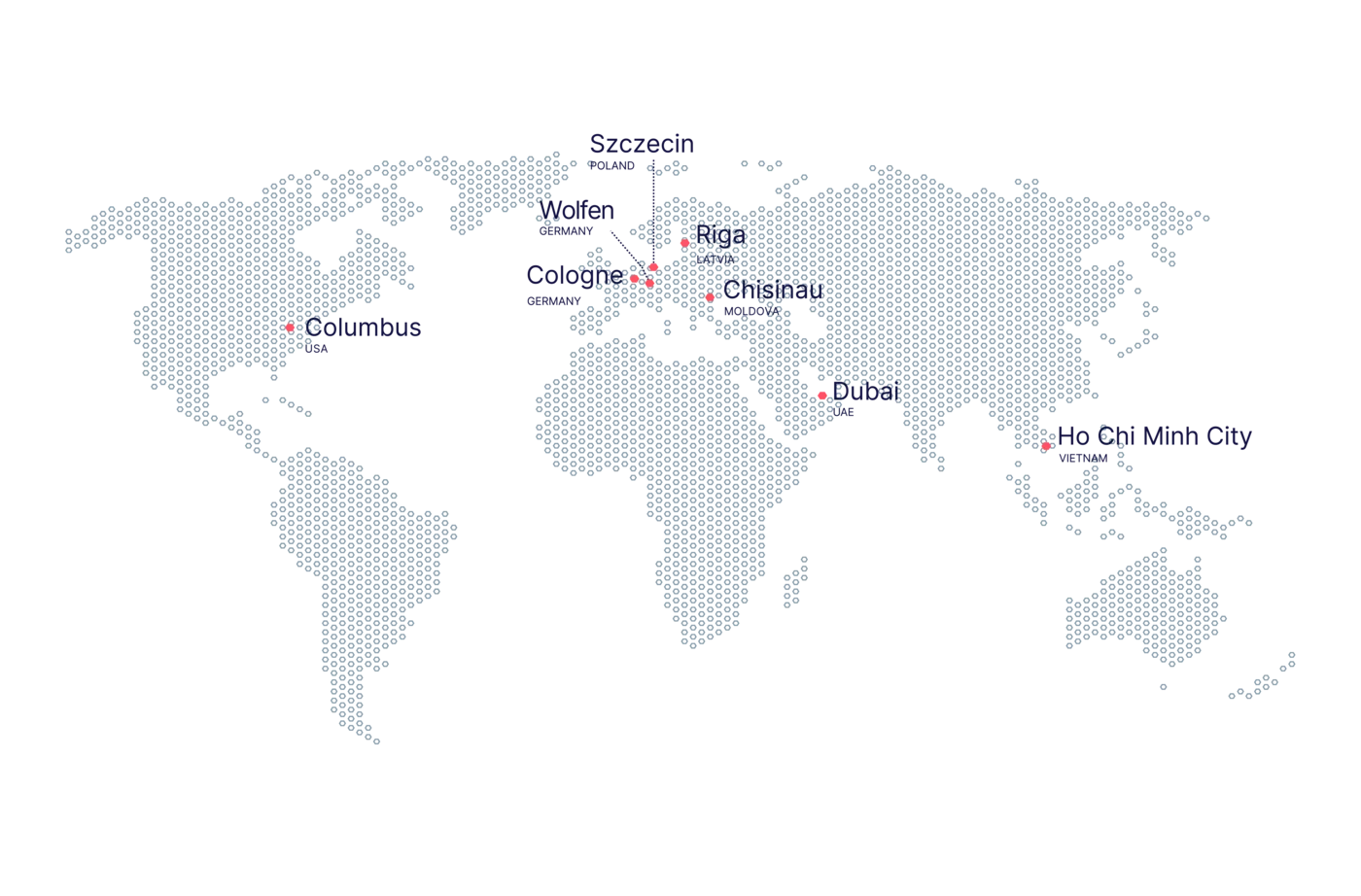
merchOne is a print-on-demand manufacturer specializing in high-quality wall art and home décor, produced in-house at four facilities — three in Europe (Latvia, Poland, and Germany) and one in the US (Columbus). As part of The Customization Group, founded in 2006, merchOne owns and runs the production facilities that print sellers’ designs — which creates direct operational visibility into what is being manufactured and shipped. Copyright compliance practices include documented seller acknowledgment at account signup that designs are original or properly licensed, standard copyright compliance terms in seller agreements, a DMCA takedown response process for verified notices from rights holders, production-side flagging when obviously trademarked content reaches the production queue, and clear escalation paths for sellers receiving disputed claims.
What no print-on-demand manufacturer can do is pre-screen every design against the entire universe of copyrighted works. Volume makes pre-screening physically impossible — even the largest rights holders cannot catch every infringing product before it ships. Responsibility for design clearance sits with the seller, not the production facility. For sellers building catalogs where copyright complexity is high — movie-style posters, music-themed prints, sports-adjacent merchandise — merchOne’s copyright guide for wall art businesses covers wall art-specific risks in more depth.
About merchOne
merchOne is a print-on-demand manufacturer specializing in high-quality wall art and home décor, produced in-house at four facilities — three in Europe (Latvia, Poland, and Germany) and one in the US (Columbus). As part of The Customization Group, founded in 2006 in Cologne, Germany, merchOne owns and runs every step from raw materials to final packaging, using HP Latex water-based inks for fade-resistant prints and FSC-certified wood frames from sustainably managed forests in Latvia across 30,000 m² of production space with a daily capacity of 2.5 million units and a 95% on-time shipping target.
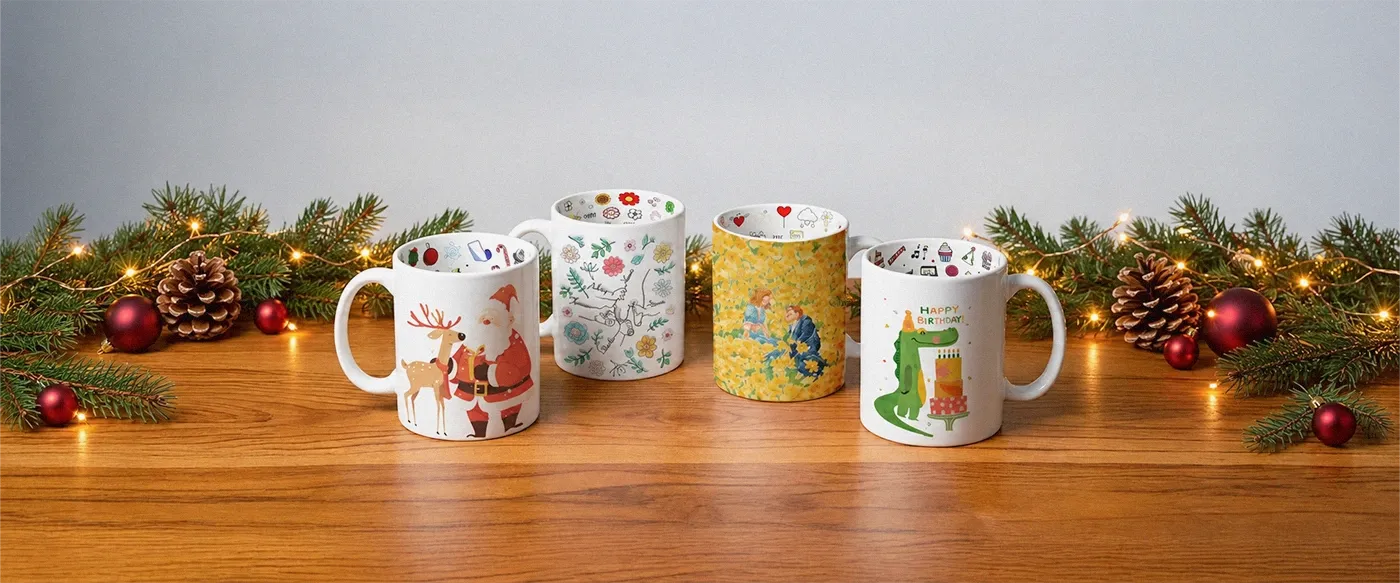
The wall art catalog covers Canvas, Framed Canvas, Framed Poster, Acrylic Print, Metal Print, Wood Panel, Passepartout, and Poster. Home décor extends to Premium Blanket, Premium Pillow, Classic Mug, four additional mug variations, and personalized gifts. Apparel is available with high-quality fabrics, durable materials, and precise print finishing. Canvas and posters ship in 2 business days; other products in 3 business days. Integration runs through a Shopify app, REST API, or Order Desk for Amazon, Etsy, eBay, WooCommerce, BigCommerce, TikTok Shop, and 30+ other e-commerce platforms.
What sellers say about merchOne
“With merchOne, we have had a strong partner at our side for years who shares our vision for high-quality, personalized products. Together, we grow a little further with every order.” Another seller noted that entering the U.S. market was significantly smoother — no customs fees, no delays, just fast and effective fulfilment at scale. A third described it as “a very efficient way to produce and ship high quality print products” with fast, reliable customer support.
Related Guides on merchOne
- How to Avoid Copyright Infringement with Wall Art for wall art-specific copyright risks and category-by-category mitigation strategies.
- 15 Most Profitable Print on Demand Niches in 2026 for niche analysis with margin data across 15 verticals.
- Best Print on Demand Companies 2026 for platform comparison across the key production and integration criteria.
- Sell Print on Demand Wall Art with merchOne for the wall décor catalog, product specs, and seller-side margin economics.
- Wall Art or Apparel? Print on Demand Data Points to Clear Profit Leader for wall art margin vs. apparel data from high-volume order analysis.
- Best Personalization Options to Add to merchOne Products for text, photo, map, and clipart customization that increases average order value.
- Top Art Print on Demand Services in 2026 for platform comparison focused on art print sellers.
- Best Printing Methods for Custom Wall Decor for production-side detail on HP Latex, dye-sublimation, and other technologies.
- Starting a Print on Demand Business: Full Guide for the complete setup sequence from account creation to first live product.
- Is Print on Demand Profitable? for margin data, cost structure, and the variables that determine whether a POD catalog generates consistent returns.
Frequently Asked Questions
Can I sell print on demand products with copyrighted characters?
No — not without a license from the copyright holder. Putting Disney characters, anime characters, sports team logos, or brand identifiers on print on demand products without permission constitutes copyright infringement, and usually trademark infringement simultaneously. Studios and brands actively monitor POD platforms and file DMCA takedowns regularly. Statutory damages reach up to $150,000 per work for willful infringement. The safe alternative is original designs inspired by an aesthetic — not reproduction of specific protected properties.
What happens if I accidentally infringe copyright on a POD product?
Accidental infringement is still infringement under U.S. copyright law. The “I didn’t know” defense does not eliminate liability — though it can reduce damages if the seller documents good-faith effort to avoid infringement. The typical sequence: a DMCA takedown notice, listing removal, and an account strike. Repeated strikes can lead to account suspension. Sellers facing claims should consult a copyright attorney before responding, since counter-notice admissions can affect the outcome of any subsequent lawsuit.
Is fair use a viable defense for print on demand sellers?
Rarely. Fair use is a legal defense raised in court after a lawsuit is filed — not a permission that prevents lawsuits from happening. The four-factor test consistently works against commercial product sales because selling is commercial by definition and typically substitutes for licensed merchandise the rights holder could sell. Genuine parody that directly comments on the original work can qualify, but the legal definition of parody is far narrower than casual use of the term.
What is the difference between copyright and trademark for print on demand sellers?
Copyright protects creative expression — artwork, photographs, text, and music. Trademark protects brand identifiers — names, logos, and slogans. Both frameworks operate independently, and a design can be clear under one while still infringing the other. The 1928 Steamboat Willie Mickey Mouse artwork entered the public domain in 2024, but “Mickey Mouse” remains an active Disney trademark. Using the name in listings or product marketing still creates legal exposure regardless of the artwork’s copyright status.
What is the 2026 public domain cutoff for print on demand sellers?
Works published before January 1, 1930 are generally in the U.S. public domain as of 2026. That includes the early Blondie comic strip, Faulkner’s As I Lay Dying, and Cole Porter compositions from Fifty Million Frenchmen. Public domain status means no license is required for commercial use in print on demand products. However, trademark rights can still apply to brand identities associated with those works — always check both frameworks before publishing.
How does the DMCA takedown process affect POD sellers?
A DMCA notice results in the platform removing the disputed listing quickly — typically before the seller has any opportunity to respond. The seller can file a counter-notice, which risks triggering a real lawsuit from the rights holder. Repeated DMCA strikes can affect an entire catalog, account standing, and payout access. The process is cheap and fast for rights holders, and slow and costly for sellers. That asymmetry is why operating well clear of protected content is the practical strategy.
How does merchOne handle copyright disputes at the production level?
merchOne operates standard copyright compliance processes: documented seller acknowledgment of design originality at signup, DMCA takedown response procedures for verified rights-holder claims, and production-side flagging when obviously trademarked content reaches the production queue. Responsibility for design clearance sits with the seller — no print-on-demand manufacturer can pre-screen every design against the full universe of copyrighted works. Sellers facing disputed claims have a clear escalation path through merchOne’s support team.
Build a Copyright-Conscious POD Catalog with merchOne
A safer POD catalog starts before production. Original artwork, verified licenses, documented public domain sources, and records for high-value designs are the foundation. The design clearance decision belongs to the seller — not the production partner.
With merchOne, sellers connect through the Shopify app, REST API, or Order Desk for multi-channel POD order routing across Amazon, Etsy, eBay, WooCommerce, BigCommerce, TikTok Shop, and 30+ other e-commerce platforms — building white-label catalogs across wall art, home décor, apparel, blankets, mugs, photo gifts, and pet products.
Before scaling, review merchOne’s pricing and platform overview, shipping policy, Help Center, privacy policy, and terms of service.