Horizontal purple gradient banner transitioning from blue-purple to pink-purple, used as a background Horizontal purple gradient banner transitioning from blue-purple to pink-purple, used as a background
Local Production Sites in the USA & EU!
No customs fees and delays - just fast and effective fulfilment to scale!


More than 500,000 premium products manufactured daily for commercial and private customers.

Explore
FEATURE
Back to All Posts
Print-on-Demand 101

7 US-Based Print-on-Demand Companies to Compare in 2026

Quick answer: US-based print-on-demand companies include merchOne, Printful, CustomCat, Prodigi, Sensaria, JONDO, and Gooten. The important distinction is not where a company is headquartered, but whether the exact product a seller uses is manufactured in the United States. merchOne, Printful, CustomCat, Prodigi, and Sensaria publish owned US production capabilities, while Gooten uses a manufacturing-partner network and JONDO operates regional manufacturing within the Sensaria family. For US sellers, domestic production can remove customs clearance from the finished US-to-US shipment, although it does not guarantee that every upstream material or component is free from tariff exposure.

If you are comparing US-based POD companies, print-on-demand companies in the USA, American print-on-demand manufacturers, or domestic POD fulfillment, the most useful criteria are production ownership, actual US production location, product coverage, fulfillment timing, and whether the SKU stays inside the US for the final customer shipment.

This guide compares seven providers using those criteria. For a broader global comparison, see our guide to print-on-demand companies. Sellers specifically evaluating domestic production can also explore merchOne’s US-based print-on-demand fulfillment.

7 US-Based Print-on-Demand Companies to Compare in 2026 • merchOne

US-Based Print-on-Demand Companies: Quick Comparison

CompanyUS production sitesProduction modelFulfillment speedProduct focus
merchOneOwned US production in Columbus, Ohio; US-focused merchOne materials also reference Phoenix fulfillmentIn-house US and EU productionStandard production SLA: 2 business days for qualifying unframed canvas and posters; 3 business days for other productsWall art, canvas, framed products, home decor, personalized products
PrintfulUS fulfillment centers including Dallas, Texas and Charlotte, North CarolinaOwned facilities plus partner-supported productionMost products: 2–5 business daysApparel, accessories, wall art, home and lifestyle products
CustomCatDetroit, MichiganIn-house US productionMost orders ship in 1–3 business daysApparel, mugs, hats, blankets and home goods
ProdigiOwned US production facility plus US partner coverageHybrid: owned facilities + vetted print partnersMany products: 24–48 hours; product-specific wall art SLAs varyFine art, wall art, photography, apparel and home products
SensariaThree domestic US facilitiesOwned/regional manufacturingAverage manufacturing lead time under 3 daysWall art, home decor, signage and art reproduction
JONDORegional US production within the Sensaria familyRegional manufacturing networkProduct-specific; published logistics materials report 95% of shipments delivered within 5 days or lessCanvas, paper prints, metal, acrylic, pillows, blankets and home decor
GootenUS production available for selected SKUs through manufacturing partnersManaged production-partner networkGooten reports a network production average under 2 business daysApparel, wall art, home and lifestyle products

Important: “US-based” and “made in the USA” are not interchangeable claims. A platform can be headquartered in the United States while routing some products through overseas or third-party facilities. Sellers should verify the production location of the exact SKU, size, and print method they plan to sell.

What Counts as a US-Based Print-on-Demand Company?

For ecommerce sellers, the most practical definition is a POD provider that can manufacture at least part of its catalog inside the United States. The production model can still differ substantially.

Owned US production

The provider operates the manufacturing facility itself. This model can reduce the number of operational hand-offs and gives the provider direct control over its own production workflow. It does not, by itself, prove that every SKU is produced domestically or that every upstream input is US-sourced.

Hybrid production

The provider combines owned facilities with external production partners. Prodigi is a clear example: it publishes owned US, UK, and EU production while also using a wider global print network.

Production-partner networks

The platform routes orders to third-party manufacturers. This can provide broader geographic coverage or supplier flexibility. Output may vary between production partners, so sellers should sample key SKUs and lock in preferred providers where the platform allows.

Network models may involve additional production partners or subprocessors, so sellers should review each platform’s data-processing and supplier-routing terms carefully. In-house production can reduce the number of operational hand-offs.

1. merchOne: In-House US Production for Wall Art and Home Decor

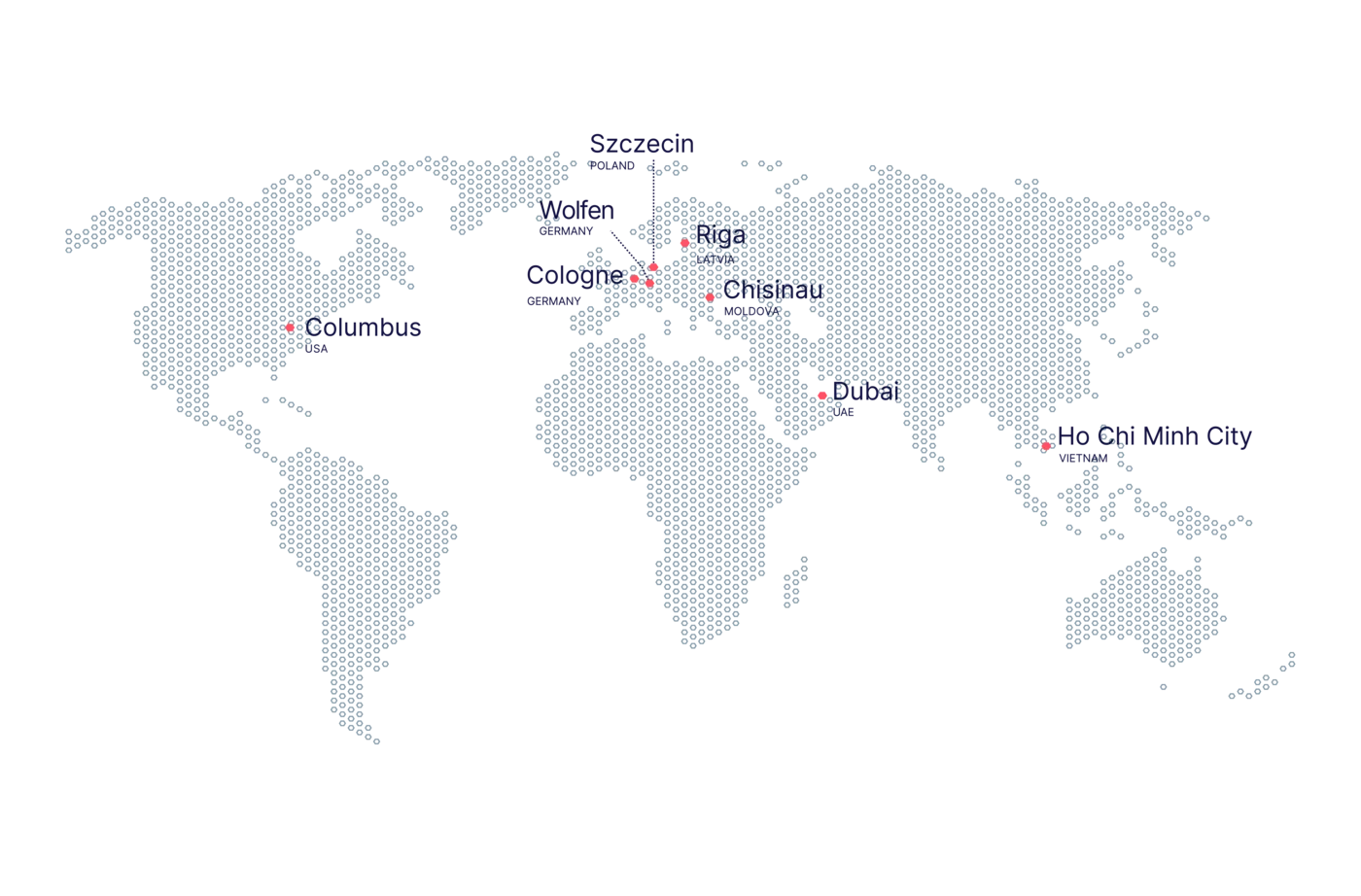
merchOne is a strong fit for sellers prioritizing owned production, US/EU fulfillment, and category depth in wall art and home decor. Its current manufacturing setup includes owned production in Columbus, Ohio, alongside European facilities in Germany, Poland, and Latvia.

Across its wider owned production footprint, merchOne publishes production capacity of up to 2.5 million products per day. For sellers evaluating US-based print-on-demand fulfillment, the relevant operational benefit is that eligible products can be produced and shipped domestically rather than importing the finished customer parcel into the United States.

Production model

Supported products are manufactured within merchOne’s own production organization. This gives merchOne direct oversight of its production, packaging, and fulfillment processes. A network model can offer different geographic or supplier-routing advantages, so the comparison should be based on the seller’s actual operating priorities rather than treating one model as universally superior.

Fulfillment timing

For qualifying orders, merchOne publishes a standard production SLA of 2 business days for unframed canvas and unframed posters and 3 business days for other products. Production time is not the same as total delivery time; carrier transit still needs to be added.

Seller branding

Canvas (2 cm), Canvas (4 cm), and Framed Canvas support a free 10 × 10 mm seller logo on the back of the product, giving sellers an additional physical brand touchpoint without changing the front-facing artwork.

Pros

  • Owned US and EU production.
  • Wall art and home decor specialization.
  • Published production SLAs for core wall art categories.
  • Seller branding on key canvas formats.
  • Domestic US production can remove customs clearance from the finished US-to-US shipment when the exact SKU is produced locally.

Considerations

  • Sellers should verify domestic availability for the exact SKU and size they plan to sell.
  • Large-format wall art should be costed by exact dimensions because packaging and carrier requirements can change.
  • Domestic production does not mean every upstream material or component is US-sourced.

Suitable for: wall art and home decor sellers prioritizing owned US production, domestic fulfillment, seller branding, and production scale.

2. Printful: US Production Within a Global POD Platform

Printful currently operates US fulfillment centers including Dallas, Texas and Charlotte, North Carolina, alongside facilities and production partners in other regions. Its catalog spans apparel, accessories, wall art, and home products.

Most Printful products are fulfilled within a stated 2–5 business-day range, although the exact production time depends on product type, customization method, volume, and routing.

Printful and Printify are now under the same parent company

Printful and Printify announced their merger in November 2024. They now sit within the same parent group, FYUL, but Printful and Printify continue to operate as separate brands and platforms with their own catalogs, pricing, integrations, and production models. Printful continues to combine owned production facilities with partner-supported fulfillment, while Printify continues to connect sellers with a network of independent Print Providers.

This distinction matters in a US-production comparison: the merger does not mean a Printify order is automatically manufactured in a Printful-owned US facility, and sellers should still verify routing at SKU level.

Pros

  • Documented US fulfillment centers.
  • Broad multi-category catalog.
  • Established ecommerce integrations and API workflows.
  • US production available for eligible products.

Considerations

  • Not every Printful SKU should be assumed to be produced in the United States.
  • Product availability and routing can differ by market.
  • Printful and Printify remain operationally separate despite sharing the FYUL parent group.

Suitable for: multi-category POD sellers that want US production as part of a wider international fulfillment setup.

3. CustomCat: Centralized US Production in Detroit

CustomCat operates from its production facility in Detroit, Michigan and focuses heavily on apparel, mugs, hats, blankets, and related merchandise. The company states that most orders ship within 1–3 business days.

Pros

  • Centralized US production.
  • Short published production window for most orders.
  • Strong apparel and common gift-product coverage.

Considerations

  • A single-facility model has different geographic trade-offs from a multi-site or partner-network model.
  • Carrier transit should be added to production time when setting customer delivery expectations.
  • Specialist wall art sellers should compare category depth separately.

Suitable for: US-focused apparel and merchandise stores looking for centralized domestic production.

4. Prodigi: Hybrid US Production for Fine Art and Photography

Prodigi combines owned manufacturing with a broader print-partner network. The company states that its facilities in the US, UK, and EU are owned and operated by Prodigi, while a larger partner network expands regional product coverage.

Prodigi reports that many products are produced within 24–48 hours, although wall art SLAs vary by format. Fine art prints, framed prints, and canvas should therefore be compared individually rather than using one platform-wide speed figure.

Pros

  • Owned US production.
  • Strong fine-art and photography focus.
  • Hybrid model combines owned manufacturing with wider network coverage.
  • Detailed product-level production information.

Considerations

  • Not every product is necessarily manufactured in the owned US facility.
  • Production times vary by product and manufacturing route.
  • Specialist and framed products should be evaluated using landed cost rather than base price alone.

Suitable for: photographers, artists, and wall art sellers seeking specialist print formats with access to US production.

5. Sensaria: Multi-Facility US Wall Art Manufacturing

Sensaria focuses on wall art, home decor, art reproduction, signage, and commercial print. Its current materials report three domestic US facilities and a wider regional footprint through the JONDO network.

Sensaria states an average manufacturing lead time of under three days. The exact location and SLA should still be verified by product because manufacturing requirements differ across wall art formats and sizes.

Pros

  • Multiple domestic US facilities.
  • Strong wall art and home decor focus.
  • Regional manufacturing capabilities.

Considerations

  • Sensaria and JONDO are part of the same broader business family and should not be treated as fully unrelated networks.
  • Exact routing should be confirmed by SKU.

Suitable for: higher-volume wall art and home decor businesses evaluating multi-facility US manufacturing.

6. JONDO: Regional Manufacturing Within the Sensaria Family

JONDO specializes in regional manufacturing for canvas, paper prints, metal, acrylic, pillows, blankets, and other decor products. It operates within the broader Sensaria family, so sellers comparing Sensaria and JONDO should account for that relationship rather than treating them as completely independent production ecosystems.

JONDO’s published logistics materials report that 95% of shipments are delivered within five days or less. This is a delivery metric, not a universal manufacturing SLA.

Pros

  • Long-standing wall art and home decor specialization.
  • Regional production approach.
  • US manufacturing available within the broader network.

Considerations

  • Current US routing should be confirmed for the specific product.
  • Delivery metrics should not be compared directly with production-only SLAs from other providers.

Suitable for: wall art and home decor sellers evaluating regional production within the Sensaria/JONDO manufacturing ecosystem.

7. Gooten: US Production Through a Manufacturing Network

Gooten is a US-based POD platform that fulfills through a managed network of manufacturing partners rather than an owned-factory-only model. Selected products can be manufactured in the United States, while location varies by SKU and routing.

Pros

  • Broad catalog across apparel, wall art, home, and lifestyle products.
  • US manufacturing available for selected products.
  • Network structure can provide supplier redundancy and broader sourcing coverage.

Considerations

  • A US-based company address does not mean every product is made in the USA.
  • Output may vary between production partners, so sellers should sample key SKUs and lock in preferred providers where the platform allows.
  • Production location should be verified before making domestic-origin or delivery claims to customers.

Suitable for: sellers prioritizing network flexibility and access to US production on selected SKUs.

US Production vs. Network-Model POD Fulfillment

The production model changes what the seller needs to monitor, but it should not be treated as a proxy for product quality or data security.

Owned production can reduce operational hand-offs because manufacturing remains within the provider’s own facility network. Network production can offer broader supplier coverage, geographic flexibility, or redundancy. Hybrid models combine both approaches.

For network models, output may vary between production partners, so sellers should sample key SKUs and use preferred providers where the platform allows. Network models may also involve additional production partners or subprocessors, so sellers should review each platform’s data-processing and supplier-routing terms carefully.

Tariffs, Customs, and US Print-on-Demand Fulfillment in 2026

Quick answer: Domestic US production can remove customs clearance from the finished customer shipment when a product is manufactured and delivered entirely within the United States. It does not guarantee that the provider’s materials, components, equipment, or wider supply chain have zero tariff exposure.

This distinction is particularly important in 2026 because the former broad US de minimis duty-free treatment for low-value imported parcels has been suspended. Imported POD products may therefore create additional landed-cost considerations depending on tariff classification, country of origin, and current US trade rules.

How cross-border fulfillment can affect margin

If a finished POD product is manufactured abroad and imported for a US customer, applicable duties, taxes, brokerage, customs processing, or cross-border shipping costs can affect the final landed cost. These costs may reduce margin predictability or make customer-facing delivery promises less competitive.

The exact effect depends on the product and route. Sellers should avoid applying one blanket tariff percentage to all POD products.

What domestic US fulfillment changes

When the finished product is manufactured and shipped within the United States, the customer parcel does not cross the US border as an import. This can remove customs processing and import duties from that finished domestic shipment.

That is a narrower and more accurate claim than calling a US-based POD provider universally “tariff-free.” Imported substrates, frames, blanks, textiles, machinery, inks, or other inputs can still affect the provider’s cost structure.

How to Choose a Print-on-Demand Company in the USA

1. Verify the exact US production location

Do not rely on headquarters location. Confirm where the exact SKU, size, color, and print method will be manufactured.

2. Check whether the facility is owned or partner-operated

Both models can be viable. The distinction matters when production ownership, routing control, or supplier visibility is important to the business.

3. Compare landed cost instead of base price

Include product cost, shipping, taxes, platform fees, branding, and expected replacement costs. For cross-border routes, include applicable duties, customs, and brokerage.

4. Separate production time from delivery time

A two-day production SLA does not mean two-day customer delivery. Compare production plus carrier transit using the actual customer destination.

5. Plan for peak periods

Some providers may struggle to maintain stated turnaround times during peak seasons. Review current seasonal guidance before publishing customer-facing delivery promises.

6. Sample the production route you intend to use

Check print output, product construction, packaging, branding, and delivery condition. For network models, sample the production partner or region most relevant to your store.

Which US-Based POD Company Fits Different Sellers?

merchOne is a strong fit for wall art and home decor sellers prioritizing owned US production, US/EU fulfillment, seller branding, and category depth.

Printful may fit multi-category POD sellers that want US fulfillment within a broader global platform.

CustomCat may fit apparel-oriented US stores looking for centralized production in Detroit.

Prodigi may fit fine-art and photography businesses that want owned US manufacturing plus specialist print formats.

Sensaria may fit higher-volume wall art operations looking for multiple domestic facilities.

JONDO may fit regional wall and home decor workflows within the broader Sensaria manufacturing ecosystem.

Gooten may fit sellers prioritizing network flexibility and access to US manufacturing for selected SKUs.

For a broader view of global providers, compare these models in our print-on-demand companies guide. If domestic manufacturing is the priority, review merchOne’s US-based POD fulfillment options and verify the exact products available for US production.

Frequently Asked Questions

Which POD companies manufacture in the USA?

Several POD providers publish US manufacturing capabilities. merchOne operates owned US production in Columbus, Ohio; Printful operates US fulfillment centers including Dallas and Charlotte; CustomCat manufactures in Detroit; Prodigi owns a US production facility; and Sensaria reports three domestic US facilities. JONDO supports regional US manufacturing within the Sensaria family, while Gooten offers US production through selected manufacturing partners.

Does Printful produce in the US?

Yes. Printful currently operates US fulfillment centers including Dallas, Texas and Charlotte, North Carolina. However, Printful also uses a broader international production setup, so sellers should confirm the exact production location for each SKU.

Are Printful and Printify the same company now?

Printful and Printify merged in November 2024 and now sit under the same parent group, FYUL. They continue to operate as separate brands and platforms with separate catalogs, pricing, integrations, and production models. Printful operates owned production facilities alongside partners, while Printify connects sellers with independent Print Providers.

How can POD sellers avoid customs fees on US orders?

Using a product that is manufactured and shipped domestically within the United States can remove customs processing and import duties from the finished customer parcel because it does not cross the US border. This does not mean the provider’s entire supply chain is free from tariff-related costs.

Is US-based POD fulfillment faster?

It can reduce cross-border transit and customs processing for US customers, but domestic production is not automatically faster in every case. Total delivery time still depends on production SLA, facility location, carrier service, product size, and destination.

Is US-based print on demand tariff-free?

A domestically produced US-to-US shipment does not enter the country as an imported finished parcel, so customs duties do not apply to that finished domestic shipment. However, imported materials, components, equipment, or other upstream inputs may still carry tariff-related costs. Sellers should therefore evaluate final landed cost rather than assume the entire supply chain is tariff-free.

Disclaimer: This article is provided for general informational and educational purposes only and does not constitute legal, tax, accounting, financial, customs, intellectual-property, regulatory or other professional advice. The information may not be complete or applicable to your circumstances. Requirements vary by jurisdiction, business structure, transaction, product and sales channel, and may change over time. Third-party products, services, fees, policies and availability are subject to the relevant provider’s current terms.Readers should verify current requirements with the relevant authority, platform or provider and obtain advice from a suitably qualified professional before making legal, tax, financial or compliance decisions. Nothing in this article modifies any applicable agreement or service terms

author avatar
Ngan Le SEO/AEO Specialist
SEO Specialist in the ecommerce and fulfillment industry, focused on driving organic growth and optimizing marketing campaigns to maximize sustainable sales performance. Passionate about data-driven strategies, search optimization, and conversion improvement to help brands scale effectively.