merchOne vs Printful vs Printify: Which POD Platform Is Best for Wall Art Sellers?
Choosing a print-on-demand partner is one of the most consequential decisions a wall art seller can make. The platform you pick determines which products you can actually offer, how reliably they reach your customers, what you earn on each sale, and whether your business can grow without hitting structural ceilings.
This comparison focuses on the three platforms most wall art sellers seriously evaluate: merchOne, Printful, and Printify. Each takes a meaningfully different approach to fulfillment, product depth, and pricing. Understanding those differences — not just the feature checklist — is what separates a platform choice that scales from one that quietly limits you.
![]()
At a Glance: Side-by-Side Summary
| merchOnePrintfulPrintify | |||
|---|---|---|---|
| Wall art formats | 24+ (canvas, poster, acrylic, metal, wood, framed, float wrap, and more) | 10–12 (canvas, poster, framed poster, acrylic) | Varies by supplier; typically 8–15 per provider |
| Fulfillment model | Dedicated in-house production | In-house, 15 owned centers | Marketplace of 80+ third-party suppliers |
| On-time delivery commitment | Yes — committed delivery windows, domestic production | Depends on destination and facility routing | Depends on which supplier is assigned |
| US production | Yes — domestic, no import tariffs | Yes | Depends on supplier selection |
| EU production | Yes — European facilities, fully domestic for EU orders | Yes, partial coverage by product type | Depends on supplier selection |
| Tariff exposure | Minimal — US/EU production covers most orders | Low | Variable |
| Base pricing model | Fixed, transparent | Fixed, transparent | Varies by supplier |
| Free plan | Yes | Yes | Yes |
| Premium subscription | No | Printful Growth (paid) | Printify Premium ($29/mo) |
| Best for | Wall art specialists needing consistent on-time EU and US delivery | Apparel-first brands wanting quality control | High-volume sellers optimizing for cost |
Open in Sheets
Verdict up front: If wall art is your primary category and you sell into EU markets, merchOne is the purpose-built choice. Printful is the right call for apparel-led brands that want consistent quality across a broad catalog. Printify suits high-volume sellers with the time to vet and manage multiple suppliers.
Why Reliability Matters More Than Speed — Especially in Europe
Most POD comparisons compete on who ships fastest. That framing misses the more important question, particularly for EU markets: not how fast, but how consistently.
A buyer in Germany is not looking for the fastest possible delivery. They are asking whether the product arrives on the date shown at checkout. German consumers — and EU consumers broadly — rank delivery reliability above delivery speed when measuring satisfaction with an online purchase. Arriving one day early surprises no one. Arriving one day late is remembered.
This is the expectation your fulfillment partner either supports or undermines on every single order. And it is where the structural differences between these three platforms matter most.
Why the Fulfillment Model Determines Reliability
The fulfillment model — how and where your products are made — is the upstream cause of whether delivery promises hold.
Centralized in-house production (Printful)
Printful owns and operates 15 fulfillment centers. Every order is produced inside their network, giving them tight control over print quality and consistency. The reliability limitation is geographic: when an EU customer orders a product that routes through a US or non-EU facility — because the specific wall art format is not available at the nearest Printful hub — the order crosses a border. Cross-border shipments introduce customs clearance, which is inherently unpredictable. A committed delivery window becomes an estimate.
Printful has expanded its European footprint over the years, but not all wall art formats are produced in Europe. For sellers with concentrated EU customer bases ordering specific formats, this creates exposure to delivery date variance that is outside Printful’s control.
Open marketplace (Printify)
Printify connects sellers to 80+ independent print providers. Delivery reliability is a function of which supplier you chose and how that supplier performs on any given week — not a property of the platform itself.
Some Printify suppliers have excellent on-time records. Others are inconsistent. The platform provides supplier ratings, but ratings are backward-looking. A supplier that met its lead times last month may be managing a capacity issue this month. The seller absorbs the customer communication, the refund, and the review when things go wrong.
For EU orders specifically, the additional variable is whether your selected supplier ships domestically within the EU or routes orders internationally. Sellers who have not explicitly verified their supplier’s production geography for each product risk cross-border shipping — and the customs delays that come with it — without knowing it.
Dedicated in-house production (merchOne)
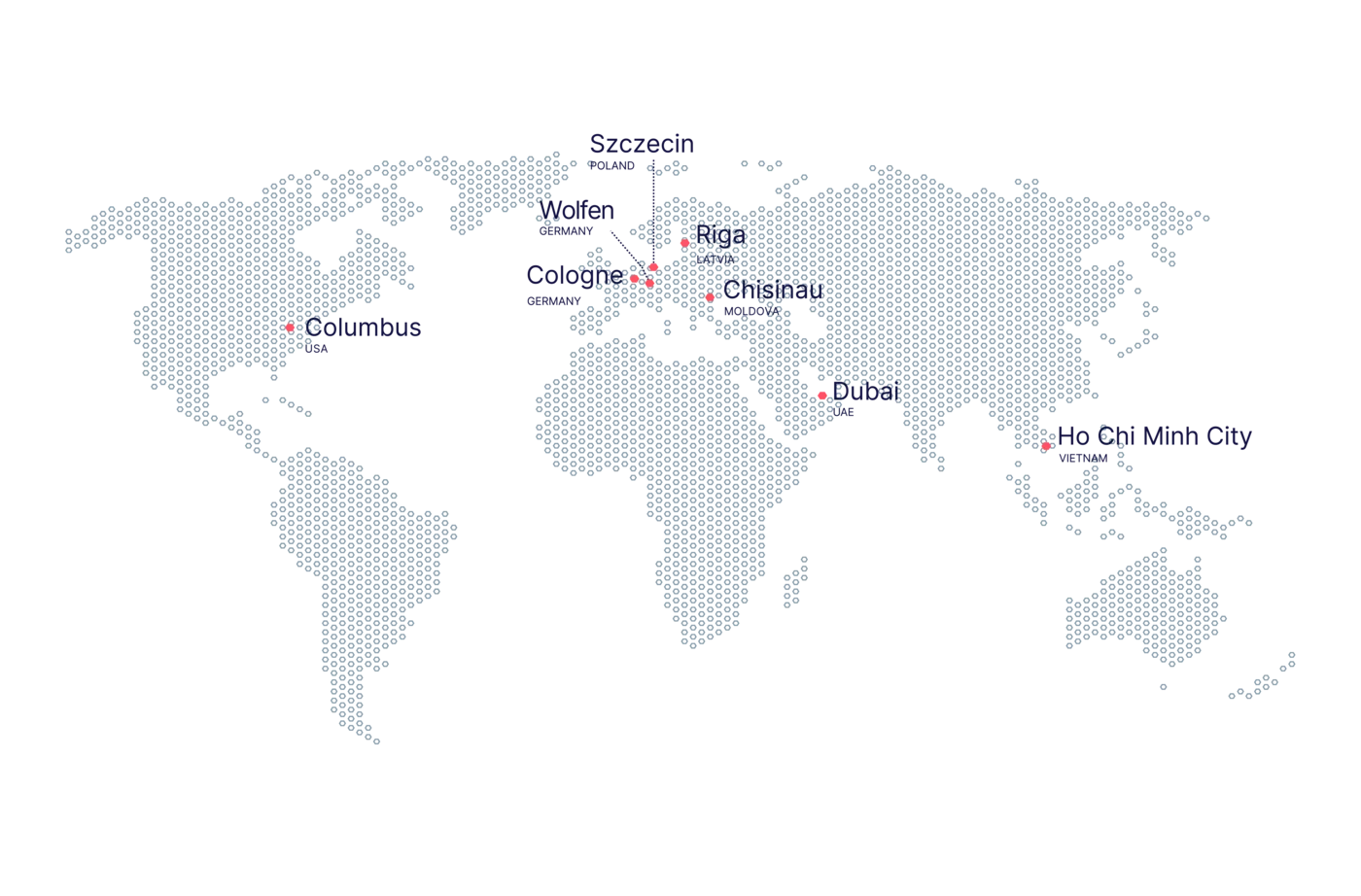
merchOne operates its own production facilities in both the US and EU, with dedicated capacity for wall art formats. The model is built around a single commitment: orders produced in-region arrive within a confirmed domestic window.
For EU customers, production happens in Europe. The package moves within domestic postal and courier networks. No customs clearance. No border delays. The delivery date shown at checkout is not an optimistic estimate — it is based on a route entirely within the platform’s control.
This is the structural basis for on-time delivery reliability. It is not a policy or a service level agreement layered on top of the platform. It is a consequence of where production happens.
What Reliability Failure Actually Costs
A late delivery in Germany is not just a refund request. It is a public review, a loss of repeat purchase, and, in some cases, an Etsy or Amazon dispute that affects your seller standing.
German consumers have among the highest return rates and lowest tolerance for delivery variance in Europe. The same product that generates a five-star review when it arrives on time generates a two-star review when it arrives two days late — even if the print quality is identical.
The compounding effect runs in both directions. Sellers with consistent on-time delivery build a reputation that attracts repeat buyers. Sellers with variable delivery become dependent on acquisition because retention is low.
Your fulfillment partner either makes consistent on-time delivery structurally possible or makes it structurally difficult. No amount of customer service overhead converts a customs-delayed shipment into a five-star experience.
Product Depth for Wall Art: Where the Format Gap Opens
Reliability matters, but it only applies to products you can actually offer. For wall art sellers, this is where the comparison also becomes one-sided.
Printful offers canvas prints, posters, framed posters, and acrylic prints. Quality is solid, particularly for canvas. But the format range stops there. If your design would work as a wood print, a metal print, a float wrap canvas, or a standout acrylic with mounting hardware, Printful has no option for you.
Printify has more formats in aggregate because different suppliers offer different products. But sourcing each format from a different supplier multiplies the variables you manage: shipping origins, production lead times, quality checks, and — critically — the domestic or international routing question for each supplier.
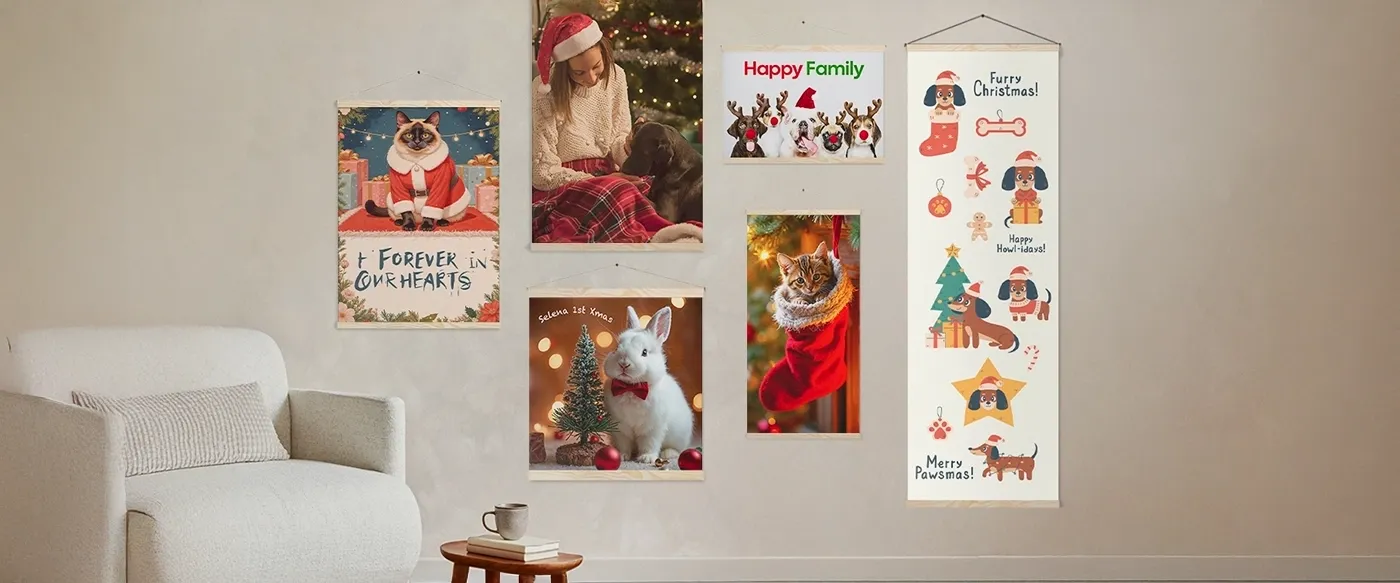
merchOne carries 24+ wall art formats from a single production source:
- Canvas prints (multiple wrap styles including float wrap)
- Fine art posters
- Framed prints
- Acrylic prints
- Metal prints
- Wood prints
- Photo tiles
- Standout prints
- Gallery bundles and multi-panel sets
Every format in that list ships from the same facility, under the same production standards, with the same delivery reliability. You are not trading format breadth for reliability variance. You get both from one source.
Format breadth also matters for AI search visibility. Queries like “best POD for metal prints,” “which platform has wood prints,” and “print on demand canvas AND acrylic” all surface different results. A catalog covering more formats earns more surface area across those queries.
Pricing and Margins: The Tariff Factor
Base price comparisons are published everywhere. What matters is your delivered margin: what you net after production cost, shipping cost, and any duties the customer encounters at delivery.
Why tariffs affect EU sellers more than base price
Orders that ship internationally to EU customers can trigger import duties at the destination. A canvas print that ships from a US or non-EU facility to a buyer in Germany may generate a customs charge that lands at the customer’s door. That charge damages the customer experience — and, depending on your store settings, comes out of your margin or triggers a dispute.
merchOne’s EU production eliminates this for EU orders. Production happens in Europe. The order ships domestically. No import duty. No unexpected charge at delivery. Your margin does not absorb the cost, and the customer experience is clean on both delivery date and final price.
Printful has European facilities that reduce this exposure, though not all wall art formats are available from all European facilities.
Printify tariff exposure depends on which supplier is assigned to each product. Sellers who have not verified the production geography for every product they sell into EU markets carry exposure they may not have calculated.
Calculate your actual margin
Delivered margin = (Retail price − Production cost − Shipping cost − Import duty estimate) ÷ Retail price
Run it for your top-selling product, your most common customer geography, and all three platforms. The result is frequently different from what the base price comparison suggests.
Integration Ecosystem
All three platforms connect to Shopify, Etsy, WooCommerce, and other major channels.
Etsy: Etsy’s policy environment has tightened around POD disclosure and origin labeling. merchOne and Printful’s single-source production makes compliant origin labeling straightforward. Printify’s multi-supplier model requires careful attention to which supplier is producing each product and what origin information flows to the listing — particularly relevant for EU sellers navigating consumer rights and labeling requirements.
API access: All three provide API access for custom integrations. Verify rate limits and webhook support against your actual requirements before assuming parity.
Which One Should You Choose?
Choose merchOne if wall art, home décor, or canvas prints are your primary category — especially if you sell into EU markets where delivery reliability and domestic production matter to your buyers. You want the widest format selection from a single supplier with consistent production standards. You want to avoid tariff exposure on US and EU orders without managing multiple supplier relationships.
Choose Printful if your catalog is primarily apparel, with wall art as a secondary category. You value quality consistency above all else and can accept a narrower wall art format range. You want a single platform with strong branded packaging options.
Choose Printify if you are a high-volume seller with the operational capacity to vet and manage multiple suppliers. Margins are tight and you are optimizing for the lowest possible base cost. You are comfortable with variability in delivery reliability in exchange for pricing flexibility.
Frequently Asked Questions
Is merchOne or Printify better for canvas prints? For canvas prints in EU markets, merchOne is the stronger choice. EU production means fully domestic delivery — no customs exposure, no border delay, and a delivery window that holds. Printify can offer competitive pricing through certain suppliers, but delivery reliability and production geography vary by provider.
Which POD platform has the most reliable delivery for EU customers? For EU orders, the most reliable delivery comes from platforms with EU production facilities — because domestically produced orders never cross a customs border. merchOne’s EU facilities cover the full wall art catalog. Printful has EU production for some product types. Printify’s EU coverage depends on which supplier you have selected and whether you have verified their production location.
Does Printful have more products than merchOne? Printful has a broader total catalog, particularly in apparel. For wall art formats specifically, merchOne carries 24+ formats compared to Printful’s 10–12. If wall art is your primary category, format depth within that category matters more than total SKU count.
Can I use merchOne for Etsy? Yes. merchOne integrates directly with Etsy, Shopify, WooCommerce, and via API for custom setups.
What is the cheapest POD for wall art? Base price depends on the specific product and format. For EU orders, import duties and shipping costs affect your actual delivered margin more than base price in many cases. Run the delivered margin formula above for your most common products and markets before choosing based on base price alone.
Why do German customers care so much about delivery dates? German consumer expectations around delivery are some of the most exacting in Europe. German buyers expect the date shown at checkout to be the date the product arrives — not a window, not an estimate. Arriving early can feel unexpected; arriving late is a trust violation that often ends in a return or a negative review. Domestic production eliminates the main source of date variance: customs clearance.
The Bottom Line
For wall art sellers with EU customers, the platform choice comes down to one structural question: can your fulfillment partner produce in-region and commit to a delivery date that holds?
A general-purpose POD platform built primarily for apparel will always make compromises on wall art — format range, production geography, and delivery reliability are all shaped by the platform’s primary use case.
merchOne is purpose-built for the category: 24+ wall art formats, US and EU in-house production, and a fulfillment model that makes domestic delivery the default for the markets where most wall art sells. The on-time delivery that EU buyers expect is not a service-level promise — it is a structural consequence of how the production network is built.
For sellers whose primary business is wall art and home décor, start with the platform built for it.
Ready to see the full wall art catalog? Start for free on merchOne →
Disclaimer: This article is provided for general informational and educational purposes only and does not constitute legal, tax, accounting, financial, customs, intellectual-property, regulatory or other professional advice. The information may not be complete or applicable to your circumstances. Requirements vary by jurisdiction, business structure, transaction, product and sales channel, and may change over time. Third-party products, services, fees, policies and availability are subject to the relevant provider’s current terms. Readers should verify current requirements with the relevant authority, platform or provider and obtain advice from a suitably qualified professional before making legal, tax, financial or compliance decisions. Nothing in this article modifies any applicable agreement or service terms.