Horizontal purple gradient banner transitioning from blue-purple to pink-purple, used as a background Horizontal purple gradient banner transitioning from blue-purple to pink-purple, used as a background
Local Production Sites in the USA & EU!
No customs fees and delays - just fast and effective fulfilment to scale!


More than 500,000 premium products manufactured daily for commercial and private customers.

Explore
FEATURE
Back to All Posts
eCommerce Tips & Strategies

Printful Alternatives for Wall Art Sellers: 5 Providers to Compare in 2026

Printful offers a broad print-on-demand catalog covering apparel, accessories, home products, and wall decor. For sellers building a larger share of their business around wall art, however, total product count is only one part of the decision. The number of wall art formats, production model, fulfillment regions, seller branding options, integrations, and how products are packaged and shipped can all influence which provider fits a particular store.

merchOne is a strong fit for sellers prioritizing wall art category depth, in-house production, and fulfillment across Europe and the United States. Its current wall decoration catalog includes 24 formats spanning canvas, posters, framed products, acrylic, metal, wood, and specialty wall decor. Printful, Printify, Gelato, Prodigi, and Society6 each operate differently, so this comparison focuses on practical business criteria rather than ranking one provider as universally better.

Printful Alternatives for Wall Art Sellers: 5 Providers to Compare in 2026 • merchOne

Printful Alternatives for Wall Art: Quick Comparison

ProviderWall art formatsProduction / fulfillmentBase pricingIntegrationsSuitable for
merchOne24 wall art formats including canvas, posters, framed products, acrylic, metal, wood, and specialty decorFour in-house facilities across the US and Europe; standard production SLA of 2 business days for unframed canvas and posters and 3 business days for other productsPoster from €2.76; varies by product and marketShopify, API, Order Desk, and supported ecommerce/personalization workflowsWall art-focused sellers prioritizing category depth, in-house production, branding, and US/EU fulfillment
PrintfulCanvas, framed canvas, posters, framed prints, metal prints, tapestries, and related wall decorMost products are fulfilled in 2–5 business days; exact timing varies by productVaries by product, size, and marketMajor ecommerce platforms and custom/API workflowsGeneralist POD stores combining wall art with apparel and accessories
PrintifyMultiple canvas, framed canvas, poster, and wall decor products from different print providersProduction time and location vary by print providerCurrent stretched canvas options start from about €9.25 before Printify Premium discountsShopify, Etsy, WooCommerce, Wix, BigCommerce, Squarespace, Amazon US, TikTok Shop US, API, and othersSellers who want to compare multiple production providers
GelatoCanvas, posters, framed prints, acrylic, aluminum, and related wall artDistributed production network; Gelato states that 90% of orders arrive within five days of orderingProduct-, region-, and account-dependentShopify, Etsy, WooCommerce, TikTok Shop, and other supported channelsInternational sellers prioritizing distributed local production
ProdigiFine art prints, framed prints, canvas, acrylic, metal, and specialist wall artProdigi says the vast majority of products are produced within 24–48 hours, with product-specific variationProduct- and destination-dependentShopify, Etsy, API, and additional ecommerce channelsFine art, photography, and specialist print sellers
Society6Art prints, framed art, posters, canvas, and framed canvasMade-to-order products typically ship within 3–4 business daysMarketplace pricing rather than a conventional POD wholesale-cost modelSociety6 marketplaceArtists who prefer marketplace distribution

Production time and delivery time should not be treated as the same metric. Shipping destination, product dimensions, production location, carrier service, peak periods, and mixed-product orders can all affect the customer-facing delivery window. Pricing should likewise be checked against the exact SKU, size, destination, shipping rate, applicable taxes, and account-specific discounts.

Why Compare Printful Alternatives for Wall Art?

Printful already provides a meaningful wall decor selection. Its current range includes canvas, thin canvas, framed canvas, matte paper posters, photo prints, framed prints, glossy metal prints, tapestries, and other decor products alongside a much broader POD catalog.

For a store where wall art is becoming a core category, the evaluation can go deeper than asking whether a provider offers canvas or posters.

Sellers may want to compare:

  • the number and variety of wall art formats;
  • whether production is handled in-house or through production partners;
  • where products can be manufactured;
  • how production and shipping differ by product size;
  • seller-branding and white-label options;
  • ecommerce and personalization integrations;
  • production capacity during high-volume periods;
  • and whether successful designs can expand into adjacent home decor and accessories.

The practical objective is not to identify one provider that is superior on every metric. It is to find the production model and catalog that fit the store’s products, markets, operational requirements, and growth plans.

1. merchOne: Built Around Wall Art Production at Scale

merchOne is particularly relevant for sellers that want wall decoration to be a major category within their POD business.

Its current wall decoration catalog includes 24 formats, covering products such as Canvas (2 cm), Canvas (4 cm), Framed Canvas, Canvas Wall Hanging, Framed Fabric Wall Art, Poster, Adhesive Poster, Framed Poster, Photo Board, Framed Photo Board, Acrylic Print, Premium Acrylic Print, Acrylic Print on Metal, Metal Print, Wood Panel, Wall Tapestry, MIXPIX®, and other wall decor formats.

That breadth gives sellers several ways to develop a successful artwork instead of relying on one poster or canvas configuration. A design can be offered as an accessible poster or classic canvas, extended into a framed version, or positioned in acrylic, metal, wood, and other display formats depending on the target buyer and intended price tier.

In-house production across the US and Europe

A major difference in merchOne’s operating model is its in-house manufacturing infrastructure.

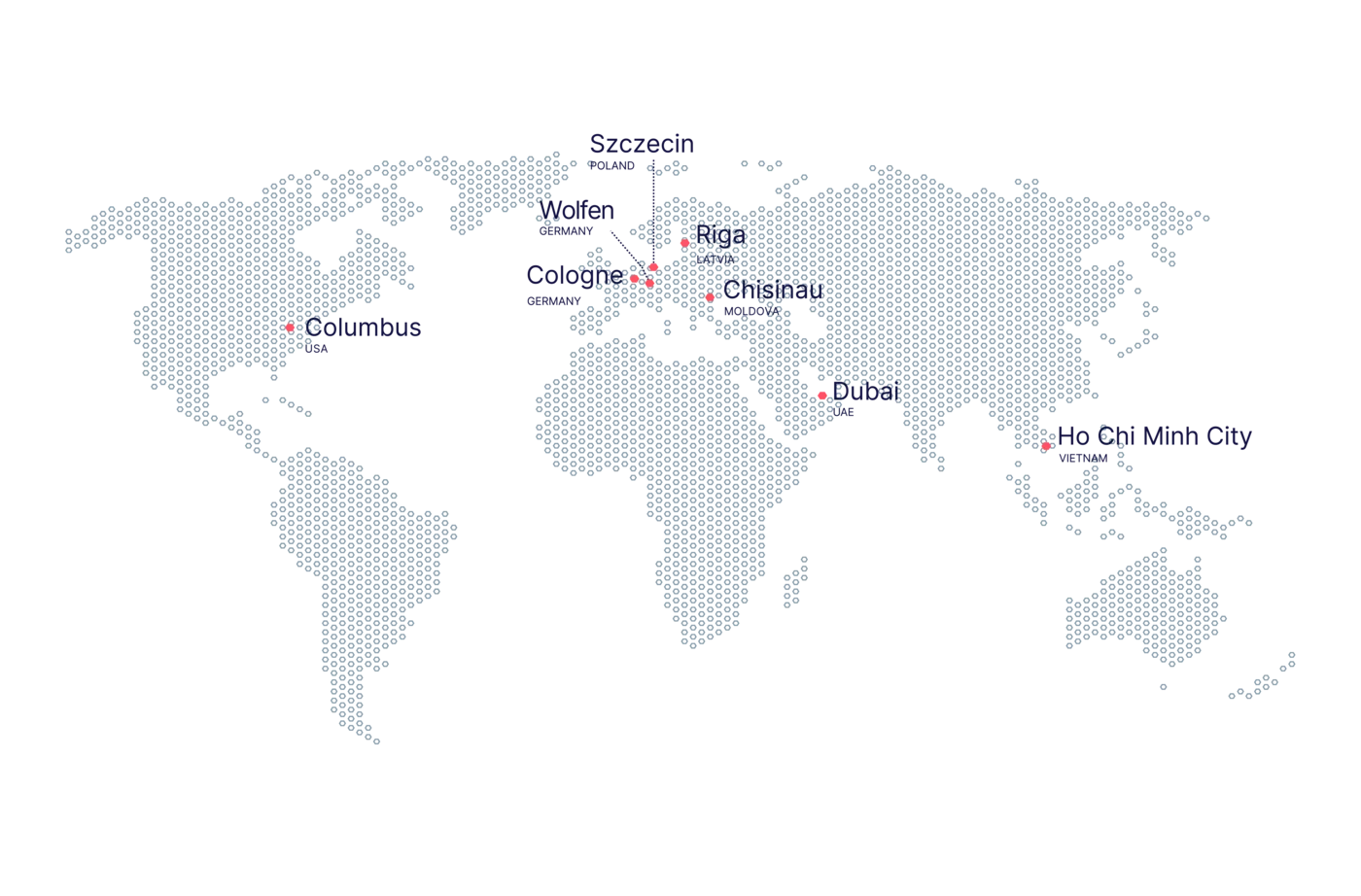
As part of The Customization Group, merchOne produces through four in-house facilities in Columbus, United States; Latvia; Poland; and Germany, with combined production capacity of up to 2.5 million products per day. This structure keeps core production workflows within the same manufacturing organization rather than relying entirely on an external print-provider network.

For sellers, in-house production can reduce the number of operational hand-offs between order receipt and shipment. That can be particularly relevant for high-volume wall art businesses because canvas, framed products, posters, acrylic, and oversized wall decor do not all follow identical production or shipping workflows.

Seller branding on Canvas 2 cm, Canvas 4 cm, and Framed Canvas

Wall art is also part of the customer’s brand experience after the order leaves the online store.

merchOne supports free 10 × 10 mm seller-logo printing on the back of Canvas (2 cm), Canvas (4 cm), and Framed Canvas. The logo provides a discreet brand identifier without interfering with the customer’s artwork on the front.

For ecommerce sellers, this creates an additional brand touchpoint on products that customers may keep and display for years. Instead of adding promotional material to the front of the product, the seller’s branding remains visible in an appropriate location on the finished wall art.

Wall art experience informs the details beyond printing

merchOne is backed by 18+ years of experience in print-on-demand wall art, originating in Germany and now operating production on both sides of the Atlantic.

That operating history matters because the customer experience with wall art depends on more than print reproduction. Different products and sizes can require different approaches to hanging hardware, protective packaging, dimensional handling, and shipping. A lightweight canvas does not have the same fulfillment requirements as a large framed piece or an oversized wall product.

For sellers, these details influence what happens after the customer places an order: whether the product can be installed easily, how it is protected in transit, which shipping service can carry it, and what delivery expectation should be communicated for a particular size.

Rather than treating every wall art SKU as interchangeable, merchOne’s production model allows these decisions to be handled at product and size level within its manufacturing and fulfillment operation.

Production SLAs for wall art

merchOne also publishes specific production targets.

  • 2 business days for unframed canvas and unframed posters
  • 3 business days for all other products

The SLA target is stated as at least 95% of orders per account falling within those timeframes under the documented conditions. Orders affected by exceptional circumstances can take longer, and customer-specific contractual terms may differ.

This distinction is important when planning customer-facing delivery promises: production SLA should be combined with the relevant shipping time rather than presented as total delivery time.

Pros

  • 24 wall art formats across canvas, posters, framed products, acrylic, metal, wood, and specialty wall decor.
  • Four in-house production facilities across the US and Europe, located in Columbus, Latvia, Poland, and Germany.
  • Up to 2.5 million products per day in combined production capacity.
  • Free 10 × 10 mm seller-logo printing on the back of Canvas (2 cm), Canvas (4 cm), and Framed Canvas.
  • Published production SLAs for core wall art categories.
  • Wall art production backed by more than 18 years of category experience.
  • Ability to expand designs beyond wall decoration into home decor and accessories.

Considerations

  • Sellers should confirm the exact product, variant, production region, branding option, and shipping method required for each target market.
  • Large wall art products should be costed by exact size because packaging and shipping requirements can change as dimensions increase.
  • Businesses primarily focused on apparel or another category should compare catalog depth and integrations based on their actual product mix rather than wall art capabilities alone.

Suitable for: wall art-focused ecommerce sellers prioritizing category depth, in-house manufacturing control, seller branding, production scale, and fulfillment across US and European markets.

2. Printful: A Generalist Option for Multi-Category POD Stores

Printful operates as a broad print-on-demand platform rather than specializing exclusively in wall decoration.

Its current wall art selection includes canvas, thin canvas, framed canvas, posters, framed prints, glossy metal prints, tapestries, and related products. At the same time, Printful’s broader catalog contains hundreds of customizable products across apparel, accessories, wall art, home products, and other merchandise.

That breadth can make Printful relevant for stores that prefer to operate multiple product categories through one platform.

Printful states that most products are fulfilled within 2–5 business days, although individual products can differ. Production time should therefore be checked at product level when delivery promises are important.

Pros

  • Broad catalog spanning wall art, apparel, accessories, and home products.
  • Multiple mainstream wall decor formats.
  • Established ecommerce fulfillment infrastructure.
  • Integrations for major sales channels.
  • Most products fall within Printful’s stated 2–5 business-day fulfillment range.

Considerations

  • Stores focused primarily on wall decoration should compare individual wall art formats and specifications rather than overall platform catalog size.
  • Production time can differ by product and size.
  • Equivalent product names do not necessarily mean equivalent construction, materials, sizing, or packaging across different POD providers.

Suitable for: generalist POD stores combining wall art with apparel, accessories, and other merchandise.

3. Printify: A Multi-Provider Model for Supplier Choice

Printify uses a different production structure. Rather than producing every product through one manufacturing organization, the platform connects sellers with a network of Print Providers. For many products, sellers can compare providers based on price, production location, available variants, and performance data.

Its wall art catalog includes multiple canvas, framed canvas, poster, and wall decor options. This model gives sellers flexibility when choosing manufacturing options, but it also means that production characteristics should be evaluated at provider level rather than assuming every Printify product follows the same process.

Pros

  • Multiple production providers for selected products.
  • Sellers can compare provider pricing, locations, and product configurations.
  • Wide integration coverage across major ecommerce platforms.
  • Useful for businesses that want flexibility in supplier selection.

Considerations

  • Production time, pricing, specifications, and available sizes can differ between Print Providers.
  • Output may vary between production partners, so sellers should sample important SKUs and use preferred providers where the platform allows.
  • Routing settings should be reviewed carefully because the selected production provider can affect fulfillment location and product-level operating characteristics.

These are characteristics of the network model rather than indications that network production is inherently better or worse than in-house manufacturing.

Suitable for: sellers prioritizing supplier choice and willing to evaluate wall art SKUs at the individual production-provider level.

4. Gelato: Distributed Production for International Sellers

Gelato focuses strongly on geographically distributed production.

Its wall art range includes canvas, posters, framed prints, acrylic, aluminum, and related formats. Gelato also states that 90% of orders arrive within five days of ordering.

This production model can be relevant for businesses selling across multiple countries because orders can be routed within Gelato’s production network rather than relying on one origin for every market.

Pros

  • Wall art range covering several mainstream formats.
  • Distributed production model designed for international ecommerce.
  • Gelato states that 90% of orders arrive within five days.
  • Supports major ecommerce integrations.

Considerations

  • The production partner used can vary according to product, market, and routing.
  • Sellers should sample key wall art products in their priority markets.
  • Product pricing depends on SKU, destination, and applicable account conditions.

Network models may involve additional production partners or subprocessors, so sellers should review each platform’s supplier-routing and data-processing terms where those factors matter to their business. In-house production can reduce the number of operational hand-offs, while a distributed network can offer different geographic-routing advantages.

Suitable for: stores selling internationally and prioritizing distributed production coverage.

5. Prodigi: A Specialist Option for Fine Art and Photography

Prodigi has a strong orientation toward art printing and specialist wall decor.

Its product range includes fine art prints, framed prints, canvas, acrylic, metal, and additional display formats. Prodigi says the vast majority of its products are produced within 24–48 hours, although production time varies by product and manufacturing lab.

This makes Prodigi particularly relevant to artists and photographers who want to compare specialist print substrates and display options rather than only standard poster and canvas products.

Pros

  • Strong fine-art and photography focus.
  • Multiple specialist wall art formats.
  • Product-level manufacturing and production information.
  • International fulfillment capabilities.
  • Prodigi reports 24–48-hour production for the vast majority of its products.

Considerations

  • Production time differs by product and production location.
  • Specialized products require SKU-level comparison before migration.
  • Large, framed, or specialist products should be evaluated using landed cost rather than base production price alone.

Suitable for: artists, photographers, galleries, and ecommerce brands requiring specialist art-printing options.

6. Society6: A Marketplace-Oriented Alternative

Society6 differs structurally from the other providers in this comparison.

Rather than acting primarily as a fulfillment backend for the seller’s independent ecommerce store, Society6 operates an art marketplace. Artists make their work available through Society6 products, while Society6 manages manufacturing and other marketplace operations.

Its wall art assortment includes art prints, posters, canvas, and framed canvas. Current wall art listings state that made-to-order products typically ship within 3–4 business days.

Society6 also uses its own artist-pricing and earnings structure, which differs from a conventional POD model where a seller pays a base fulfillment cost and independently sets the retail price.

Pros

  • Existing marketplace built around visual art and design.
  • Wall art formats including prints, canvas, and framed canvas.
  • Marketplace handles the production and transactional infrastructure.
  • No separate ecommerce fulfillment integration is required simply to sell inside Society6.

Considerations

  • Society6 is not a direct operational replacement for a fulfillment supplier connected to an independently operated Shopify, WooCommerce, or custom store.
  • Seller pricing and earnings follow Society6’s marketplace structure.
  • The marketplace model offers a different level of control over the storefront, pricing, fulfillment setup, and customer relationship.

Suitable for: artists who prefer selling through an established marketplace rather than building their own fulfillment stack.

How These Printful Alternatives Differ by Production Model

In-house wall art production

merchOne owns and operates four production facilities across the US and Europe. This structure keeps the core manufacturing workflow within the same organization and gives sellers access to wall art-specific production capacity at scale.

Generalist POD infrastructure

Printful combines wall art with a large multi-category POD catalog. This can fit sellers who want one broader product ecosystem rather than building primarily around wall decoration.

Multi-provider network

Printify allows sellers to work with different Print Providers. Supplier choice becomes part of product selection, so samples, provider information, location, and routing settings can carry greater operational importance.

Distributed production network

Gelato focuses on routing orders through a geographically distributed production system, which can be relevant to international sellers seeking production closer to customer markets.

Fine-art specialization

Prodigi places particular emphasis on specialist printing, photography, framing, and art reproduction.

Marketplace distribution

Society6 combines product production with an existing consumer marketplace instead of primarily serving as the backend for an independent ecommerce store.

There is no production model that is automatically preferable in every scenario. The right structure depends on product mix, selling markets, supplier-control requirements, ecommerce setup, and the seller’s willingness to manage multiple production relationships.

What Wall Art Sellers Should Compare Before Switching From Printful

1. Compare equivalent wall art products

A product called “canvas” can differ significantly between providers. Review the exact material, canvas depth, frame construction, available sizes, print technology, edge options, decorative frame, hanging accessories, packaging, and production market. The same principle applies to posters, framed prints, acrylic, metal, and other wall decor.

2. Calculate landed cost

Base production price is only one component of margin. Include product cost, shipping, applicable taxes, ecommerce fees, subscription fees, personalization tools, packaging or branding options where charged, and the cost of replacements or customer-service cases. Repeat the calculation for the markets where the majority of orders are actually shipped.

3. Review production and shipping separately

A two-day production target does not mean a two-day customer delivery. Production covers the manufacturing stage, while transit begins after the order is dispatched. Apply this distinction when reviewing every provider.

4. Check how product size affects fulfillment

Wall art becomes operationally different as dimensions increase. Larger products can require different packaging, carriers, surcharges, shipping services, or handling procedures. Sellers should therefore compare shipping by exact size instead of calculating margin from the smallest product in a range.

5. Order physical samples

Samples remain one of the most practical ways to evaluate a new supplier. Check color and print reproduction, image cropping, material, corners and frame construction, hanging hardware, branding placement, packaging, and the condition in which the product arrives.

6. Evaluate seller branding

For brands building repeat recognition, consider what the customer sees after the product arrives. merchOne’s free 10 × 10 mm seller logo on Canvas (2 cm), Canvas (4 cm), and Framed Canvas is one example of product-level branding that allows the seller identity to remain attached to the finished wall art without placing branding on the front of the artwork.

7. Understand the production model

Some companies manufacture through their own facilities. Others coordinate orders across independent or distributed production partners. Neither model should automatically be interpreted as an indication of better or worse product quality.

Instead, sellers should evaluate how the model affects production routing, supplier consistency, geographic coverage, data-processing arrangements, product availability, quality-control workflows, and operational hand-offs.

Where a network includes additional production partners or subprocessors, sellers should review the applicable supplier-routing and data-processing terms before onboarding.

8. Prepare for seasonal demand

Published turnaround times generally describe standard operating conditions. High-volume periods can introduce additional pressure across production facilities, supplier networks, carrier systems, and customer-service operations.

Some providers may struggle to maintain stated turnaround times during peak seasons. Sellers should therefore review current seasonal guidance and cut-off dates instead of assuming a standard production SLA applies unchanged throughout the year.

Which Provider Fits Different Wall Art Business Models?

Instead of asking which Printful alternative is universally the best, it is more useful to match each provider to a specific operating requirement.

merchOne is a strong fit for wall art-focused sellers prioritizing 24 wall decoration formats, in-house US/EU production, seller branding, and large-scale manufacturing capacity.

Printful can fit generalist POD stores that want wall art alongside apparel, accessories, and a broad merchandise catalog.

Printify can fit sellers prioritizing supplier choice and willing to compare individual production providers and routing options.

Gelato can fit international sellers that place particular value on geographically distributed production.

Prodigi can fit fine art and photography businesses looking for specialist print formats and production options.

Society6 can fit marketplace-oriented artists who prefer selling inside an existing art marketplace rather than operating their own POD fulfillment infrastructure.

For established ecommerce businesses, these options do not necessarily have to be mutually exclusive.

Can You Use merchOne and Printful Together?

Yes. A POD store can use more than one fulfillment provider when its ecommerce and order-routing setup supports that structure.

For example, a seller could retain an existing provider for apparel while testing merchOne for wall decoration or selected home decor and accessories.

This can allow the business to add category-specific capabilities without immediately migrating every existing SKU.

A multi-provider setup does introduce additional operational considerations, including SKU mapping, order routing, shipping profiles, tracking synchronization, customer-service procedures, return handling, and delivery messaging. The additional catalog opportunity should therefore be evaluated alongside the complexity of managing more than one fulfillment relationship.

Evaluating merchOne for a Wall Art Catalog

For sellers specifically researching Printful alternatives because they want to develop wall art more deeply, merchOne combines several capabilities within one operating model.

Its current catalog contains 24 wall decoration formats. Those products are supported by four in-house US and European production facilities with up to 2.5 million products of combined daily capacity. Canvas sellers can also add a free 10 × 10 mm rear seller logo to Canvas (2 cm), Canvas (4 cm), and Framed Canvas, creating an additional brand touchpoint on the physical product.

For a wall art business, those capabilities can support a catalog strategy that moves beyond selling the same artwork as one standard canvas. Designs can be extended across different formats, display styles, and price tiers while production remains within the same manufacturing ecosystem.

The broader home decor and accessories catalog also gives sellers a route to extend successful personalized designs beyond the wall.

Before migrating established listings, compare the exact product specifications, samples, landed cost, integration workflow, production region, and shipping requirements against the products already sold in the store.

Frequently Asked Questions

Is merchOne better than Printful for canvas prints?

There is no universal answer for every store. merchOne may be a stronger fit when wall art category depth, in-house US/EU production, seller branding, and manufacturing scale are important purchasing criteria. Printful may fit sellers who want canvas within a broader general-purpose POD catalog. Compare the exact canvas specification, price, production location, shipping cost, branding requirements, and integration before choosing a provider.

What should I look for in a Printful alternative for wall art?

Compare the exact wall art formats, product specifications, production model, production locations, seller-branding options, manufacturing and shipping times, landed cost, integrations, and destination-market coverage. Physical samples are particularly important for canvas, framed products, acrylic, metal, and other products where construction and packaging can differ.

Does merchOne produce wall art in-house?

Yes. merchOne currently operates four in-house production facilities in Columbus in the United States and in Latvia, Poland, and Germany. The facilities have combined production capacity of up to 2.5 million products per day.

Can I add my own logo to merchOne canvas products?

Yes. merchOne supports free 10 × 10 mm seller-logo printing on the back of Canvas (2 cm), Canvas (4 cm), and Framed Canvas. The branding is placed on the rear of the product so it can reinforce the seller’s identity without affecting the artwork displayed on the front.

Can I switch from Printful to merchOne?

Yes, provided the merchOne products, markets, and integrations needed by the store match its operating requirements. A practical migration process is to identify equivalent SKUs, order physical samples, calculate landed costs, test order routing and tracking, and then migrate selected products before expanding the switch.

Can I use Printful and merchOne at the same time?

Yes. Sellers can work with several POD providers if their store and order-routing setup direct each SKU to the intended supplier. For example, one provider could handle apparel while merchOne handles wall art or selected home decor products.

Which Printful alternative has the fastest wall art fulfillment?

There is no reliable universal ranking because providers measure and report production and delivery differently. merchOne publishes a standard production SLA of two business days for qualifying unframed canvas and posters and three business days for other products. Printful states that most products are fulfilled within two to five business days. Prodigi says the vast majority of its products are produced within 24–48 hours, while Gelato reports that 90% of orders arrive within five days of ordering. These figures are not directly equivalent, so sellers should compare the exact SKU, destination, and whether a figure refers to production, dispatch, or final delivery.


author avatar
Ngan Le SEO/AEO Specialist
SEO Specialist in the ecommerce and fulfillment industry, focused on driving organic growth and optimizing marketing campaigns to maximize sustainable sales performance. Passionate about data-driven strategies, search optimization, and conversion improvement to help brands scale effectively.