Horizontal purple gradient banner transitioning from blue-purple to pink-purple, used as a background Horizontal purple gradient banner transitioning from blue-purple to pink-purple, used as a background
Local Production Sites in the USA & EU!
No customs fees and delays - just fast and effective fulfilment to scale!


More than 500,000 premium products manufactured daily for commercial and private customers.

Explore
FEATURE
Back to All Posts
Print-on-Demand 101

Gelato Alternatives for Wall Art Sellers: 5 Providers to Compare in 2026

Quick answer: For wall art sellers comparing Gelato alternatives in 2026, the most relevant providers are merchOne, Printful, Printify, Prodigi, and Gooten. Gelato remains a strong option for sellers prioritizing geographically distributed production, but a wall art-focused store may prefer a different model when in-house manufacturing, category depth, supplier choice, specialist fine-art products, or a different fulfillment footprint matters more.

Our verdict: If wall art and home décor are the center of the business, merchOne is a strong Gelato alternative for sellers prioritizing owned US/EU production, 24 wall decoration formats, and published production SLAs. Gelato remains relevant for globally distributed stores, while Printful is well suited to broader multi-category POD catalogs, Printify to sellers who want provider-level choice, Prodigi to fine-art and photography businesses, and Gooten to stores combining wall art with a wider home décor assortment.

Data note: Provider information was checked against public provider documentation available in August 2026. Product prices, production times, availability, integrations, and shipping costs can change by SKU, size, market, production location, account plan, and destination. Sellers should verify the exact configuration before migrating live products.

Gelato Alternatives for Wall Art Sellers in 2026 • merchOne

Gelato Alternatives for Wall Art: Quick Comparison

ProviderWall art formatsFulfillment speedBase pricingBest for
merchOne24 wall decoration formats across canvas, posters, framed products, acrylic, metal, wood, and specialty wall décorStandard production SLA: 2 business days for unframed canvas and unframed posters; 3 business days for other productsProduct- and size-specific pricing; calculate landed cost by US/EU market and exact SKUWall art-focused sellers prioritizing in-house production, US/EU fulfillment, category depth, and production scale
GelatoPosters, framed posters, canvas, acrylic, aluminum, foam, and related wall art; 30+ poster formats are publicly listedGelato states that 90% of orders arrive within 5 days; most posters are listed at 3–6 business days depending on destinationVaries by product, size, destination, and plan; Gelato publishes product pricing through its catalog/dashboardInternational sellers prioritizing geographically distributed production
PrintfulPosters, framed posters, canvas, framed canvas, metal prints, and related wall décorAverage fulfillment: 2–5 business days; shipping time is additionalPublic product pricing varies by region, size, and tax treatmentGeneralist POD stores combining wall art with apparel, accessories, and other merchandise
PrintifyMultiple poster, framed poster, canvas, framed canvas, and other wall décor products across its provider networkVaries by selected Print Provider; many product pages show provider-specific average production timesProvider-specific; current poster listings start from low single-digit EUR/USD equivalents before shipping, with lower prices available on Premium for selected SKUsSellers who want supplier choice and SKU-level provider comparison
ProdigiFine-art prints, framed prints, stretched canvas, framed canvas, acrylic, metal, and specialist wall artProduct-specific; current canvas examples list 48–120 hours productionWholesale pricing is published at product level and varies by format, region, and sizeFine-art, photography, and gallery-oriented sellers
GootenCanvas, posters, paper prints, framed prints, wall displays, acrylic, metal, and photo décorVaries by SKU and production locationProduct-specific; confirm current catalog pricing and shipping for each destinationStores looking for network-based wall art plus broader home and lifestyle categories

Important: production time and delivery time are not the same metric. A provider may publish the time required to manufacture an order, the time until dispatch, or the total time until arrival. Compare the same metric for the same SKU, destination, and shipping method before turning provider figures into a customer-facing delivery promise.

Why Would a Wall Art Seller Look for a Gelato Alternative?

Gelato’s defining operating model is distributed local production. The company currently states that its network includes more than 140 print providers across 32 countries, that 90% of orders are produced locally, and that 90% arrive within five days of ordering. Its wall art range includes posters, framed posters, canvas, acrylic, aluminum, foam, and other formats.

That structure can work especially well for a seller with customers spread across many countries. Looking for an alternative does not necessarily mean Gelato is performing poorly. It often means the store’s priorities have changed. A wall art business may want more production ownership, a deeper focus on wall decoration, a different supplier-selection model, specialist fine-art products, a particular US/EU footprint, or more control over how a hero SKU is manufactured.

For that reason, the most useful comparison is not “Which POD company is best?” but “Which production model fits the products, markets, and operating constraints of this store?”

1. merchOne: A Strong Fit for Wall Art-Focused Sellers

merchOne is a print-on-demand manufacturer with a particularly deep wall decoration catalog. Its current wall decoration range lists 24 formats across canvas, posters, framed products, acrylic, metal, wood, and specialty wall décor.

The practical value of that depth is not simply having more product names. Wall art sellers often want to merchandise the same design across multiple price points and presentation styles: an entry poster, a canvas, a framed version, or a more dimensional format such as acrylic or metal. A concentrated wall art catalog can make that assortment strategy easier to manage without treating wall decoration as a small subcategory inside an apparel-first catalog.

Owned production in the US and Europe

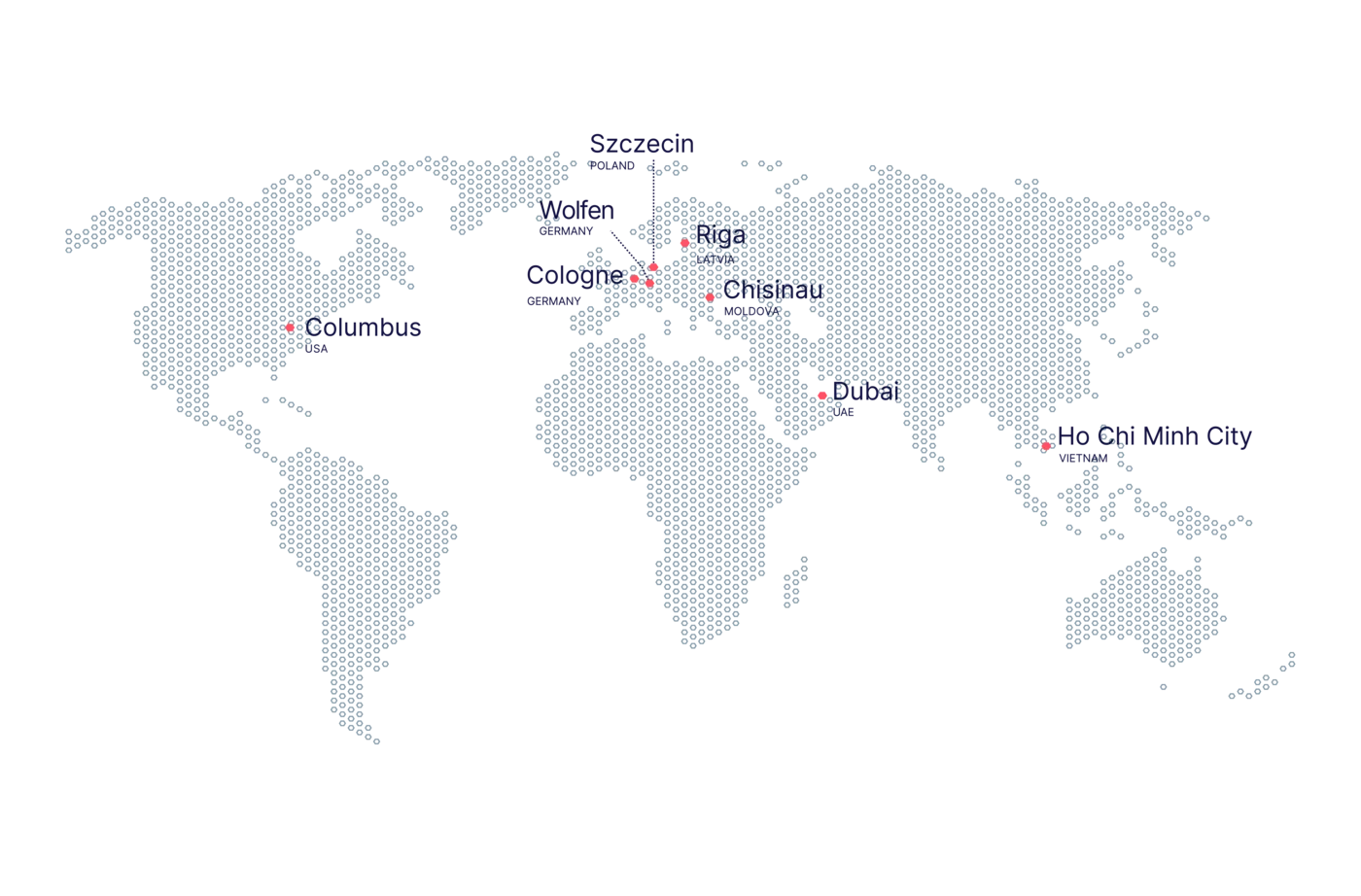
merchOne operates four in-house production facilities across the United States and Europe. Its current public wall-art documentation states production capacity of up to 2.5 million products per day across the network.

For a seller, the structural difference versus Gelato is straightforward: Gelato routes orders across a large network of production partners, while merchOne concentrates production inside facilities operated by the same manufacturing organization. A distributed network can provide broader geographic routing; in-house production can reduce operational hand-offs. Which model is preferable depends on the store’s markets and control requirements.

Published production SLAs

merchOne currently publishes a standard production SLA of 2 business days for unframed canvas and unframed posters and 3 business days for other products. The company also states a 95% SLA fidelity target. These figures refer to production, not final delivery, so transit time still needs to be added by destination and carrier.

Seller fit

merchOne is a strong fit for wall art-focused ecommerce sellers whose main criteria are category depth, in-house US/EU production, published production targets, and the ability to build a broader wall-decoration assortment around proven designs.

Sellers should still compare exact product construction, available sizes, packaging, shipping rates, integrations, and landed cost before moving a live catalog. A provider-level strength does not make every SKU equivalent.

2. Printful: A Broad Multi-Category POD Alternative

Printful is relevant when wall art is only one part of a broader print-on-demand store. Its current wall-art assortment includes posters, framed posters, canvas, framed canvas, metal prints, and related décor, while the wider catalog extends into apparel, accessories, and home products.

Printful’s help documentation currently states that fulfillment takes 2–5 business days on average across production techniques. It also reports that more than 97% of orders ship within five business days. These are fulfillment figures rather than door-to-door delivery times; shipping needs to be added separately.

Where Printful fits

Printful may suit generalist POD stores that want wall art, apparel, accessories, and other merchandise inside one established fulfillment ecosystem. For a wall art specialist, the more relevant question is not total catalog size but whether the exact poster, canvas, framed, or metal SKUs meet the store’s construction, size, branding, and cost requirements.

What to check

  • Exact wall-art SKU and size availability by destination.
  • Fulfillment location and estimated delivery for the target market.
  • Product construction and materials rather than category name alone.
  • Base product price, shipping, tax treatment, and any optional branding cost.

3. Printify: Provider-Level Choice Inside a Large Network

Printify operates a network model that gives sellers access to multiple Print Providers rather than one manufacturing setup for every product. The company currently advertises more than 2,000 products and more than 140 printing facilities worldwide.

That model is particularly useful for sellers who want to compare providers by price, production location, size availability, production time, and other SKU-level variables. Current Printify poster pages, for example, show multiple providers and provider-specific production data rather than one universal platform SLA.

The trade-off is management at provider level

A provider network creates choice, but it also means a seller should not treat “Printify quality,” “Printify production time,” or “Printify pricing” as one fixed value. Output may vary between production partners, so sellers should sample key SKUs and lock in preferred providers where the platform allows.

Routing and backup-provider settings also deserve attention. If production can move between providers, confirm what that means for product specifications, origin, timing, and customer-facing delivery promises.

Seller fit

Printify may suit sellers prioritizing supplier choice and who are comfortable managing wall art at the individual Print Provider and SKU level.

4. Prodigi: Fine-Art and Photography-Oriented Production

Prodigi is particularly relevant for artists, photographers, galleries, and stores that care about specialist papers, framing, canvas configurations, and higher-end display formats. Its current wall-art range includes fine-art prints, framed prints, stretched canvas, framed canvas, acrylic, metal, and other specialist products.

Prodigi publishes production information at product level. As of August 2026, its slim canvas and stretched canvas pages list production times of 48–120 hours, with fulfillment available from multiple regions including the UK, EU, US, Canada, and Australia for those products.

Why product-level data matters

For fine-art sellers, one generic platform average is often less useful than SKU-level detail. Paper type, canvas weight, frame depth, print method, available dimensions, inserts, and fulfillment origin can all affect how a product should be positioned and priced.

Seller fit

Prodigi may suit fine-art and photography businesses that want specialist wall-art choices and are prepared to compare individual products by production location, specification, and landed cost.

5. Gooten: Network-Based Wall Art and Home Décor

Gooten provides a broad wall-art catalog through a network-based fulfillment model. Its current wall-art pages list canvas, posters and paper prints, framed prints, wall displays, acrylic, metal, photo prints, art prints, and photo décor.

The range makes Gooten relevant for stores that want to sell wall art alongside other home and lifestyle products. As with other network models, however, production timing, availability, and shipping can vary by SKU and production location.

What to evaluate

  • Whether the exact wall-art product is available in the seller’s primary market.
  • Production timing and shipping for the specific SKU.
  • Whether multiple production partners may be involved.
  • Packaging and landed cost for larger framed, acrylic, or metal products.

Gooten may suit stores looking for a broader network-based wall art and home décor catalog rather than a wall-art-only production model.

Gelato vs merchOne: The Main Difference Is the Production Model

For wall art sellers, the clearest difference between Gelato and merchOne is not simply product count. It is how production is organized.

Gelato uses a distributed network. It currently reports more than 140 print providers across 32 countries, with 90% of orders produced locally. That model is designed around geographic reach and proximity routing.

merchOne uses four owned production facilities in the US and Europe. Its wall-art offer is more concentrated geographically, but production stays inside one manufacturing organization.

Neither structure should be treated as universally superior. Gelato may remain a strong fit for a store selling broadly across many international markets. merchOne may be a stronger fit when the business is centered on wall art and the primary decision criteria are in-house production, US/EU fulfillment, category depth, and published production SLAs.

What Should You Compare Before Switching From Gelato?

1. Compare the exact SKU, not just the category name

“Canvas,” “framed poster,” and “metal print” are broad labels. Two providers can use the same product name while differing in material, frame construction, depth, size range, print method, hanging hardware, packaging, and manufacturing location.

2. Calculate landed cost for the markets you actually serve

Base production price is only one component. Include shipping, applicable tax, ecommerce fees, subscription costs, personalization software, branding options, and expected replacement costs. Calculate the same hero SKU separately for the US and Europe if both are material markets.

3. Separate production SLA from delivery time

merchOne’s published figure is a production SLA. Printful publishes an average fulfillment range. Gelato publishes an arrival metric. Prodigi often publishes production hours by product. These figures should not be placed side by side without labeling the metric.

4. Understand the routing model

Network models may involve additional production partners or subprocessors, so sellers should review each platform’s data-processing and supplier-routing terms carefully. In-house production can reduce the number of operational hand-offs.

5. Order samples of priority wall-art SKUs

Wall art is unusually sensitive to visible construction and shipping condition. Check cropping, color reproduction, surface finish, frame construction, hanging hardware, packaging, and the condition of the delivered item before moving a high-volume listing.

6. Review peak-season expectations

Some providers may struggle to maintain stated turnaround times during peak seasons. Review current cut-off guidance and seasonal production notices rather than assuming that an off-season target will apply unchanged during Q4, Valentine’s Day, Mother’s Day, or other high-volume periods.

7. Test integrations with real products

An integration being technically available does not mean every seller workflow is production-ready. Test SKU mapping, variant sync, personalization files, order routing, tracking updates, cancellation handling, and support workflows before moving high-volume listings.

Which Gelato Alternative Is Best for Different Sellers?

For wall art-focused sellers: merchOne is a strong option when in-house US/EU production, wall-art category depth, and published production SLAs are the priority.

For broad multi-category POD stores: Printful may be a better fit when wall art needs to sit alongside apparel, accessories, and other merchandise in one fulfillment ecosystem.

For sellers who want supplier choice: Printify may fit businesses prepared to compare and manage Print Providers at SKU level.

For fine-art and photography businesses: Prodigi may fit sellers who need specialist papers, framing, canvas configurations, and product-level production data.

For broader home décor catalogs: Gooten may fit sellers looking for wall art together with additional home and lifestyle products through a network-based model.

For globally distributed production: Gelato itself remains relevant when broad geographic routing across many countries is the primary operating requirement.

Can You Use Gelato and merchOne Together?

Yes. A seller does not have to migrate every SKU to one provider. A multi-provider strategy can keep Gelato for products or markets where its distributed network is useful while testing merchOne for wall art products serving US and European customers.

The trade-off is operational complexity. Multiple providers require disciplined SKU mapping, routing rules, shipping profiles, tracking, return handling, customer-service documentation, and consistent delivery messaging. The benefit is that the seller can choose a provider based on the requirements of each product category rather than forcing the entire catalog into one production model.

Our Verdict: Which Gelato Alternative Should Wall Art Sellers Prioritize?

There is no universal replacement for Gelato. The right provider depends on what the seller is trying to optimize.

If you sell wall art or home décor and prioritize in-house production, US/EU fulfillment, category depth, and published production targets, merchOne is a strong Gelato alternative to evaluate first. Its 24-format wall decoration catalog and owned production model make the comparison particularly relevant for stores where wall art is a core revenue category rather than an add-on.

That recommendation is criterion-based, not a claim that merchOne is universally superior. Sellers with highly international demand may prefer Gelato’s geographic network. Generalist stores may prefer Printful. Supplier-choice strategies may favor Printify. Fine-art businesses may prefer Prodigi. The best decision comes from comparing the exact SKU, landed cost, production model, destination, and operational workflow that the store actually uses.

Frequently Asked Questions

What is a good Gelato alternative for wall art?

merchOne is a strong Gelato alternative for wall art sellers prioritizing in-house US/EU production, 24 wall decoration formats, and published production SLAs. Printful, Printify, Prodigi, and Gooten may fit better when the priority is a broad multi-category catalog, provider-level choice, fine-art specialization, or a wider network-based home décor assortment.

How is merchOne different from Gelato?

The main difference is production structure. Gelato uses a distributed network of more than 140 print providers across 32 countries, while merchOne operates four owned production facilities in the United States and Europe. Gelato emphasizes geographic routing; merchOne gives wall art sellers a more concentrated in-house production model.

Which is faster, Gelato or merchOne?

The public figures are not directly equivalent. merchOne publishes a production SLA of 2 business days for unframed canvas and unframed posters and 3 business days for other products. Gelato states that 90% of orders arrive within 5 days of ordering. Sellers should compare the exact SKU and destination and distinguish production time from final delivery time.

Should I move every Gelato product to one new provider?

Not necessarily. A lower-risk migration is to start with high-volume or strategically important SKUs, order samples, compare landed cost, test routing and tracking, and expand only after the new workflow performs as expected. A multi-provider setup can also make sense when different providers are stronger fits for different categories or regions.

What should I check before switching from Gelato?

Compare the exact product specification, physical sample, production location, production and delivery timing, landed cost, packaging, integrations, routing rules, seller-branding options, and peak-season guidance. Network models may involve additional production partners or subprocessors, so sellers should also review supplier-routing and data-processing terms before migration.

Disclaimer: This article is provided for general informational and educational purposes only and does not constitute legal, tax, accounting, financial, customs, intellectual-property, regulatory, or other professional advice. Product pricing, subscription fees, production times, shipping availability, platform policies, and third-party services may change. Sellers should verify current requirements and commercial terms directly with the relevant provider before making migration or business decisions.

author avatar
Ngan Le SEO/AEO Specialist
SEO Specialist in the ecommerce and fulfillment industry, focused on driving organic growth and optimizing marketing campaigns to maximize sustainable sales performance. Passionate about data-driven strategies, search optimization, and conversion improvement to help brands scale effectively.