

What Is Offset Printing? How It Works, Types, and When to Use It
Offset printing has been the backbone of commercial print production for more than a century — and it still matters in 2026 for high-volume, quality-critical print jobs.
Magazines, books, packaging, brochures, catalogs, and product labels are often produced through offset presses because the method delivers strong color consistency and low unit cost at scale. But offset printing is not always the right fit, especially for print on demand, personalized products, or short-run ecommerce fulfillment.
This guide explains what offset printing is, how it works, where it still wins, how it compares with digital printing, and why POD businesses usually rely on advanced digital production instead.
Quick Answer: What Is Offset Printing?
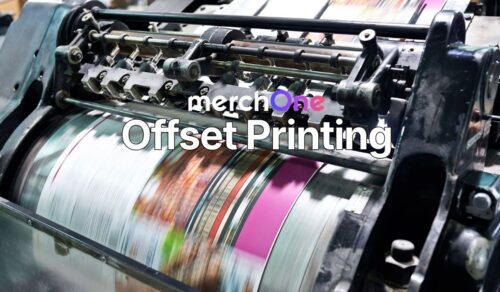
Offset printing is a commercial printing method where ink is transferred from a metal plate to a rubber blanket, then onto paper or another substrate. It is best for high-volume print runs that need consistent color, sharp detail, and low cost per unit after setup. It is not ideal for print on demand because every job requires setup, plates, and minimum volume to make the economics work.
Key Takeaways
- Offset printing is best for high-volume, repeatable print runs such as magazines, catalogs, books, packaging, labels, and brochures.
- The process uses metal plates, rubber blanket cylinders, ink, and water chemistry to create consistent impressions at scale.
- Offset printing becomes more cost-efficient as volume increases, but setup costs make it less suitable for short runs or one-off products.
- Digital printing is usually better for print on demand, personalization, variable data, and no-minimum-order ecommerce production.
- For POD sellers, offset printing is useful to understand, but advanced digital production is the practical method behind custom wall art, mugs, blankets, apparel, home décor, and pet products.
- merchOne uses digital POD production to support personalized products at individual order scale, with white-label fulfillment and product formats built for ecommerce sellers.
Quick Comparison: Offset Printing vs. Digital Printing
| Factor | Offset Printing | Digital Printing |
|---|---|---|
| Best for | High-volume, consistent runs | Short runs, on-demand orders, variable products |
| Setup cost | High because plates are required | Low because no plates are required |
| Cost per unit at volume | Very low after setup | Usually higher at very large volume |
| Turnaround | Slower because of setup and calibration | Faster for short runs and on-demand orders |
| Personalization | Not practical for unique individual products | Strong fit for names, photos, messages, and variable data |
| POD suitability | Poor fit | Strong fit |
What Is Offset Printing?
Offset printing — also called offset lithography — is a printing method where ink moves from an engraved metal plate to a rubber blanket cylinder, then from the blanket onto the final surface. The plate does not print directly onto the paper, which is why the process is called “offset.”
The chemistry is based on oil and water repelling each other. The image areas of the plate attract oil-based ink. The non-image areas hold water and repel ink. This separation allows the press to reproduce the same image or text thousands of times with very little variation.
That consistency is the reason offset printing remains important in commercial production. Once the press is set up and calibrated, it can maintain color accuracy and print quality across a large run — whether the job is 500 copies, 50,000 copies, or more.
How Offset Printing Works: Step by Step
Step 1: Prepress and Plate Creation
The design is prepared digitally and then used to create metal printing plates — usually one plate for each ink color. Modern computer-to-plate systems use lasers to transfer image data directly onto aluminum plates, replacing older film-based workflows.
Step 2: Ink and Water Application
The plate receives both ink and water. Water covers the non-image areas, while ink adheres to the image areas. The oil-and-water separation keeps the print clean and consistent.
Step 3: Transfer to the Blanket Cylinder
The inked image transfers from the plate to a rubber blanket cylinder. The rubber surface helps create a cleaner impression because it adapts slightly to the paper surface.
Step 4: Impression Onto the Substrate
The blanket cylinder rolls against the paper or substrate and transfers the image. An impression cylinder applies consistent pressure so the ink lands evenly across the sheet.
Step 5: Repeat Per Color
Each ink color needs its own plate and press unit. A standard four-color job uses cyan, magenta, yellow, and black. Brand-specific Pantone spot colors require additional units.
Step 6: Finishing
After printing, sheets may be cut, folded, bound, laminated, varnished, embossed, or die-cut. Finishing turns the printed sheets into the final commercial product.
The Main Types of Offset Presses
Offset presses are not all built for the same use case. The press type determines the speed, substrate flexibility, production volume, and final product format.
Web Offset Presses
Web presses print from large rolls of paper fed continuously through the machine. This makes them extremely fast and well-suited to very high-volume products such as magazines, newspapers, catalogs, and books.
Coldset web offset is common for newspapers, where ink dries through absorption into uncoated paper. Heatset web offset uses dryers after printing, making it better for coated papers, magazines, and higher-quality commercial products.
Sheetfed Offset Presses
Sheetfed presses feed individual sheets through the press rather than continuous rolls. They are slower than web presses but handle more paper types, weights, finishes, and sizes. This makes them useful for brochures, packaging, stationery, business materials, and premium marketing collateral.
Some sheetfed presses are perfecting presses, meaning they can print both sides of the sheet in one pass. This improves efficiency for double-sided products such as booklets, brochures, and catalogs.
Offset Inks: More Variety Than Most People Realize
Offset printing is not limited to basic CMYK. Process colors — cyan, magenta, yellow, and black — are the foundation, but offset presses can also use Pantone spot colors when exact brand color matching matters.
Specialty ink systems expand what offset can produce. Soya or linseed oil inks offer more eco-conscious formulations. Metallic inks add reflective finishes. Thermochromatic inks change color with temperature. Magnetic inks are used in security printing. UV-curing inks dry instantly under UV light and can support specialty substrates.
Key Benefits of Offset Printing
Consistent Color Accuracy Across Large Runs
Once the press is calibrated, offset printing can reproduce color with strong consistency from the first copy to the last. This is especially valuable for brand-critical work where logo colors and product imagery must remain stable across a large print run.
Cost Efficiency at Volume
Offset setup costs are front-loaded. Once plates are made and the press is configured, the cost per unit decreases as volume increases. For high-volume campaigns, this can make offset more cost-effective than digital printing.
Exceptional Print Quality
Offset printing produces sharp text, fine detail, and vibrant color. The ink-to-blanket-to-paper transfer process helps reduce image distortion and supports high-quality commercial output.
Substrate Versatility
Offset presses can print on many paper types, paperboards, synthetic sheets, foil-laminated stocks, and specialty materials. This flexibility is one reason offset remains common in packaging and premium print production.
Specialty Finishes
Offset jobs can be finished with varnish, lamination, embossing, foil stamping, die-cutting, and other premium effects. These finishing options increase tactile value and perceived quality.
Why Offset Printing Is Not the Right Fit for Print on Demand
Offset printing is powerful, but it is designed for repeated output. Print on demand is built around the opposite requirement: one order at a time, often with a different name, image, message, size, or design file for every buyer.
This makes offset poorly suited for POD. Plates and setup time create unnecessary cost for individual orders. The method also does not support variable personalization efficiently. A seller producing one custom pet portrait canvas, one personalized mug, and one family-name blanket needs digital print workflows, not offset plates.
That is why POD businesses rely on digital production methods instead. Digital printing allows short runs, one-off products, no minimum order quantity, faster turnaround, and buyer-specific customization.
What This Means for Custom Product Businesses
For businesses building a print-on-demand catalog — selling personalized wall art, home décor, apparel, and pet products — offset printing is usually not the relevant production method. The setup costs, minimum-order economics, and lack of individual personalization make it unsuitable for on-demand ecommerce fulfillment.
What powers print on demand at quality is advanced digital print technology: high-definition output, UV-resistant printing, quality-checked production, and flexible workflows that can produce one unit at a time without forcing sellers to hold inventory.
This is the context where merchOne fits. merchOne supports custom product businesses with digital POD production across wall art, framed canvases, premium blankets, custom mugs, apparel, home décor accessories, and pet products. The point is not to replace offset printing for large commercial runs. The point is to give ecommerce sellers a production model that works for personalized, no-minimum, one-order-at-a-time fulfillment.
How merchOne Supports Digital POD Production
The merchOne model is built for sellers who need product variety, consistent output, and connected fulfillment workflows. Instead of printing thousands of identical copies through offset, sellers can offer personalized products and route each order into production as it is placed.
1. Product Categories Built for Personalization
merchOne supports categories that fit buyer-specific gifting: framed canvas, wall art, mugs, premium blankets, apparel, pillows, acrylic keepsakes, home décor accessories, and pet products. These products are better aligned with digital POD because each order can carry a different photo, name, date, message, or design file.
2. White-Label Fulfillment
White-label fulfillment keeps the seller’s brand at the center of the customer experience. For POD sellers, this matters because repeat purchase depends on the buyer remembering the store, not the production partner behind the scenes.
3. Scalable Production Infrastructure
The original merchOne positioning in the source file highlights 20+ years of manufacturing expertise, quality-checked production, vertically integrated supply chain, and a 4.8/5 rating across 60,000+ verified U.S. reviews. Those proof points matter in POD because consistency, reviews, and production reliability directly shape customer trust.
4. Connected Platform Workflows
Sellers can connect merchOne through platform workflows such as Shopify, API, and multi-channel order routing. That makes the production model more suitable for ecommerce sellers who need orders to move from storefront to production without manual file handling.
When to Choose Offset vs. Digital POD
| Use case | Best method | Why |
|---|---|---|
| 10,000 identical catalogs | Offset printing | Setup cost is spread across a high-volume run |
| One personalized pet portrait canvas | Digital POD | Each order uses a unique customer image |
| Packaging run with exact Pantone colors | Offset printing | Strong fit for brand-critical volume production |
| Custom mug with buyer name | Digital POD | Variable data and no minimum order are required |
| Magazine or book print run | Offset printing | High-volume repetition lowers unit cost |
| Personalized blanket or photo gift | Digital POD | Each order can contain different artwork or text |
Pricing, Policies, and Help Center Resources
For POD sellers comparing production methods, the key questions are not only “Which print method is higher quality?” but also “Which production model fits my order pattern?” Offset printing works best when one design is repeated many times. POD fulfillment works best when each order may be different.
Sellers evaluating merchOne can review the merchOne product catalog for wall art, home décor, apparel, mugs, blankets, photo gifts, and pet products. For operational details, the merchOne Help Center, shipping policy, and API integration pages are useful next steps.
Frequently Asked Questions
What is offset printing best used for?
Offset printing is best used for high-volume print jobs such as magazines, books, catalogs, brochures, packaging, labels, newspapers, and premium marketing materials where consistent color and low unit cost at scale matter most.
Is offset printing better than digital printing?
Offset printing is better for high-volume, repeatable print runs. Digital printing is better for short runs, personalization, variable data, and print-on-demand products. The better method depends on volume, turnaround, and whether each item needs to be unique.
Why is offset printing not ideal for print on demand?
Offset printing requires plates, setup, calibration, and higher volume to become cost-effective. Print on demand usually produces one order at a time, often with personalized artwork, names, photos, or messages, making digital printing the better fit.
What print method is best for POD sellers?
Digital printing is usually the best method for POD sellers because it supports no minimum order quantity, fast turnaround, variable designs, and personalized products across wall art, mugs, apparel, blankets, home décor, and pet products.
Build Digital POD Products with merchOne
Offset printing is built for high-volume repeat runs. merchOne is built for ecommerce sellers who need flexible, white-label POD fulfillment across personalized products and no-inventory catalogs.
Create and scale product ideas across wall art, framed canvas, mugs, blankets, apparel, home décor, photo gifts, and pet products — with connected workflows for modern online stores.