


Is Print on Demand Profitable in 2026?
The short answer is yes — print on demand can still be profitable in 2026. The longer answer is more important: POD is profitable for sellers who treat it like a real product business, not a passive upload-and-wait side project.
Print on demand is not profitable when the store is built on copy-paste designs, generic niches, weak pricing, or unreliable fulfillment. The difference between sustainable POD income and a store that disappears after six months usually comes down to niche focus, product selection, pricing discipline, and fulfillment quality.
This guide covers what the data says about POD profitability in 2026, what drives margins, which products perform best, and the practical steps that separate profitable sellers from everyone else.
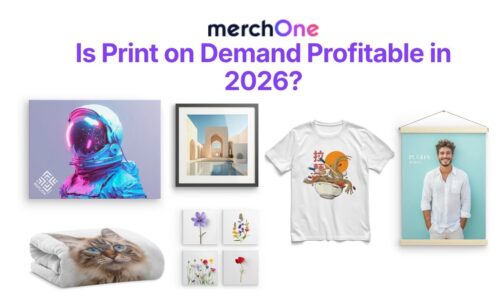
Quick Answer: Is Print on Demand Profitable in 2026?
Yes, print on demand can be profitable in 2026, especially for sellers focused on personalized products, niche audiences, premium wall art, mugs, blankets, home décor, and gift-led categories. Typical POD profit margins range from 20% to 40%, while premium personalized products can reach 50% or more when pricing, design, and fulfillment are handled correctly.
Key Takeaways
- Print on demand is profitable when sellers build around specific niches, strong designs, and reliable fulfillment.
- Typical POD margins sit around 20% to 40%, while premium, personalized, or gift-led products can reach 50% or higher.
- Generic apparel is competitive, but personalized mugs, wall art, blankets, home décor, and photo gifts support stronger perceived value.
- Profitability depends on full-cost pricing, including production, shipping, platform fees, ad spend, and expected margin.
- The most profitable POD stores test consistently, publish new products regularly, and improve based on conversion data.
- Fulfillment quality directly affects profit through reviews, refunds, repeat purchase, delivery speed, and customer trust.
Quick Profitability Table: POD Products and Margin Potential
| Product category | Typical margin range | Profit driver |
|---|---|---|
| Apparel | 20%–40% | Niche targeting, original design, premium blanks |
| Mugs and drinkware | 40%–60% | Low production cost, personalization, gifting intent |
| Wall art and canvas | 30%–50% | Premium perceived value and emotional display value |
| Blankets and home décor | 30%–50% | High gift value, daily use, family personalization |
| Paper products and accessories | Up to 70%+ markup potential | Low base cost and strong add-on potential |
The State of the Print on Demand Market in 2026
Before getting into profitability specifics, it helps to understand the market context. The global print-on-demand market is currently valued at $12.96 billion and is projected to climb to $102.99 billion by 2034, at a 26% CAGR — putting POD among the fastest-growing segments of the ecommerce landscape.
That growth is not speculative. It is driven by a structural shift in how consumers shop: away from mass-produced generics and toward products that feel personal, specific, and made for them. 62% of today’s shoppers want something uniquely theirs rather than another generic product.
For sellers, this is the most important signal in the market. Demand for personalized, custom products is rising faster than supply — which means well-positioned stores with strong designs and reliable fulfillment have a genuine window of opportunity, even as overall competition increases.
What Are the Real Profit Margins in Print on Demand?
Profit margin figures vary depending on the source, the product category, and the pricing strategy — but the data clusters around a consistent range.
A typical print-on-demand profit margin falls between 20% and 40%. Lower margins are common for competitive basics, while premium, personalized, or niche products can reach 50% or more, depending on pricing strategy and perceived value.
The average profit margin for top-selling POD products is often strongest when the product has either emotional relevance, visual permanence, daily use, or a clear gift occasion.
The takeaway: print on demand margins are real and meaningful — but they require intentional pricing. Sellers who set prices based only on what competitors charge for generic products tend to compress their margins unnecessarily. Sellers who price based on design quality, personalization value, and perceived premium consistently achieve the higher end of the range.
Is Print on Demand Still Worth It in 2026?
A common concern among sellers researching POD is saturation. The honest answer: the market is competitive at the generic level, and still open at the specific level.
Most competition in print on demand comes from copy-paste sellers offering the same tired designs. Sellers who bring something fresh, niche-specific, and well-executed to the table operate in a very different competitive environment.
The personalized gifts market alone is projected to grow from $30.7 billion in 2023 to nearly $54 billion by 2032. That is not a saturated market. That is a growing market being served inconsistently — and inconsistency is where well-run stores find their advantage.
Long-term survival in POD requires consistency: successful sellers upload new products regularly, test continuously, and adapt based on what converts — not what they assume will sell.
What Actually Drives Profitability in a POD Business
Understanding profit margins is only useful if you know what variables control them. These are the factors that consistently separate profitable stores from struggling ones.
1. Niche Focus Over Broad Appeal
Broad stores selling generic designs compete with millions of similar listings on price alone. Niche stores that speak directly to a defined audience — dog-loving moms, vintage car enthusiasts, teachers with a specific sense of humor — can charge more and convert better because their products feel personally relevant.
The more specific the audience, the higher the perceived value — and the more defensible the price.
2. Design Quality and Originality
Designs featuring one to two strong elements often outperform complex layouts. Simplicity is not laziness — it is one of the most reliable design principles in POD because buyers need to understand the product quickly.
Original designs that cannot be found anywhere else justify premium pricing in a way that trend-chasing copies never can.
3. Pricing Strategy
Most new sellers underprice. They look at competitor listings and price to match — compressing margins before the store has even found its audience.
A more sustainable approach is to calculate the full cost: production, shipping, platform fees, ad spend, and expected returns or replacements. Then add the target margin on top. For sustainable growth, sellers should usually target at least 30% to 40%. For premium, personalized products, 50% or higher can be achievable with the right positioning.
4. Fulfillment Quality
Your fulfillment partner’s performance directly determines your store’s reputation. A slow or inconsistent supplier means delayed orders, damaged products, negative reviews, and more customer service work — all of which lower profit over time.
Choosing a fulfillment partner with proven quality standards, fast production, and responsive support is not an operational detail. It is one of the highest-leverage decisions a POD seller makes.
5. Product Selection
Not all products carry the same margin potential. Starting with high-demand, lower-cost-to-produce items — mugs, tote bags, posters — lets sellers build revenue while testing designs.
Expanding into higher-value formats — framed canvases, premium blankets, personalized home décor — opens the door to better margins and higher average order values as the store matures.
The Most Profitable Print on Demand Products in 2026
Based on production cost, demand consistency, personalization potential, and buyer willingness to pay, these are the product categories with the strongest margin opportunities.
Personalized Wall Art
Personalized wall art, including framed canvases, posters, and passepartouts, carries high perceived value and strong gifting intent. A framed canvas with a family name, birth flower design, pet portrait, or memorial message occupies a market segment where the emotional value of the product can far exceed the production cost.
Custom Mugs
Custom mugs have consistent year-round demand with peaks around Mother’s Day, Christmas, and Valentine’s Day. Name-based, message-driven, and identity-based mugs command prices above production cost because personalization creates value that generic mugs cannot replicate.
Premium Blankets
Premium blankets are high-perceived-value products with strong gifting demand. A custom blanket with a family photo, baby milestone, pet portrait, or meaningful message can retail at a price point that feels premium while still supporting healthy margins.
Home Décor and Accessories
Home décor products such as pillows, keyrings, acrylic hearts, and frames can sit in the sweet spot between affordable production and meaningful gifting. Personalized pillows, acrylic hearts, and glitter frames work well when the buyer wants something specific but still accessible.
Apparel
Apparel remains a consistent POD category across seasons. Identity-based and message-driven designs — such as Mama, Grandma, profession pride, hobby identity, or niche-specific humor — perform better than generic graphics because they create an immediate personal connection.
How to Build a Profitable Print on Demand Business: 5 Practical Steps
Step 1: Choose a Niche Before Choosing Products
Define the audience first. A clear niche makes every later decision easier: design direction, product selection, pricing, and marketing channel. Start specific. A store can expand later, but it is difficult to turn a broad generic catalog into a focused brand after the fact.
Step 2: Pick a Fulfillment Partner Based on Quality, Not Just Cost
The cheapest supplier is rarely the most profitable. Inconsistent print quality, slow fulfillment, and poor customer service all create downstream costs: returns, negative reviews, lost repeat customers, and lower conversion.
Step 3: Price for Margin, Not for Competition
Calculate the full cost, set a minimum target margin, and price accordingly. If the design has real value — personalization, original artwork, niche relevance, or emotional meaning — buyers will pay for it.
Step 4: List Consistently and Test Constantly
Top-performing POD sellers publish and test consistently. Most revenue in successful stores comes from a fraction of listings, but sellers cannot know which fraction without testing enough products, niches, and price points.
Step 5: Invest in Marketing Proportional to What Works
Email marketing, SEO, social media, and paid ads can all support POD growth. The key is not using every channel equally — it is investing more in the channels that show a clear return for the specific audience and product category.
Where merchOne Fits Into POD Profitability
For sellers trying to make print on demand profitable, merchOne is most relevant when the catalog depends on products with higher perceived value: wall art, canvas, framed prints, mugs, blankets, pillows, apparel, home décor, and personalized gifts. These categories usually give sellers more pricing room than basic low-cost apparel because buyers are purchasing for emotional value, display value, or gifting intent.
That matters because profitability is not only a question of base cost. A seller can have a cheap product and still lose money if the product feels generic, arrives late, or creates refund requests. A better margin structure often comes from selling products that feel premium enough to justify a higher retail price while keeping fulfillment consistent behind the scenes.
merchOne supports that kind of catalog through white-label print-on-demand fulfillment and product categories that fit gift-led ecommerce. Sellers can build around wall decoration, canvas, mugs, blankets, home décor accessories, apparel, and personalized photo products without holding inventory.
How merchOne Helps Protect POD Margins
A profitable POD business needs more than products to list. It needs margin protection across production, fulfillment, customer experience, and repeat purchase. merchOne helps in four practical areas.
1. Premium Product Categories
Wall art, framed canvas, mugs, blankets, pillows, acrylic keepsakes, and home décor products usually give sellers more pricing flexibility than commodity T-shirts. Buyers are less likely to compare purely on price when the product is personalized, giftable, or designed for display inside the home.
2. White-Label Fulfillment
White-label fulfillment helps the seller’s brand stay at the center of the customer experience. That matters for profitability because repeat purchase is easier when the buyer remembers the store, not the production partner behind the order.
3. Connected Selling Workflows
Sellers can connect merchOne through Shopify, REST API, or Order Desk, depending on how their store is built. This helps reduce manual order handling, especially for stores selling across Shopify, Etsy, WooCommerce, Amazon, TikTok Shop, or other channels through routing workflows.
4. Product Range for Testing
Profitability usually comes from testing enough product ideas to find what converts. merchOne’s catalog gives sellers room to test the same design system across formats: canvas, framed prints, mugs, blankets, pillows, tote bags, acrylic hearts, glitter picture frames, apparel, and seasonal gifts.
Why Your Fulfillment Partner Shapes Your Profitability
Everything above — niche, design, pricing, and marketing — only delivers results if orders are fulfilled reliably. A fulfillment partner that drops the ball during peak season does not just create short-term customer service problems. It creates long-term brand damage that is more expensive to repair than any production cost savings.
The criteria that matter are print quality at scale, fast turnaround, reliable shipping expectations, and a verified track record. Every order should look like the sample, because consistency is what earns repeat customers and five-star reviews
This is where merchOne becomes relevant for sellers building around wall art, home décor, mugs, blankets, apparel, and personalized gifts. The merchOne product catalog is built around scalable POD production, white-label fulfillment, and product formats that support both gift value and margin potential.
For example, a seller can start with a personalized wall art design, then expand the same concept into a framed canvas, mug, blanket, pillow, tote bag, or keepsake format. This matters for profitability because the seller does not need a completely new niche for every product. One winning design angle can become a small product family, increasing AOV and giving returning buyers more reasons to purchase again.
This product-family approach is especially useful in evergreen and seasonal niches: pet memorials, wedding gifts, family name décor, Mother’s Day, Easter, Christmas, graduation, first-home gifts, and anniversary products. Instead of relying on one product listing to carry the entire business, sellers can build a focused catalog around one buyer intent and offer several formats at different price points.
Pricing, Policies, and Help Center Resources
POD profitability depends on more than base product cost. Sellers should also account for shipping rates, delivery expectations, replacement handling, taxes, billing, integration setup, and how order data moves into production.
For merchOne sellers, the shipping policy and merchOne Help Center are useful references before scaling a store. Sellers using automation should also review API integration options and platform setup details.
Frequently Asked Questions
Is print on demand profitable for beginners?
Yes, print on demand can be profitable for beginners, but only if they choose a focused niche, price for margin, test consistently, and avoid generic copy-paste designs. Beginners usually struggle when they treat POD as passive income instead of a product business.
What is a good profit margin for print on demand?
A good POD profit margin is usually 30% to 40% after production, shipping, platform fees, and marketing costs. Premium personalized products can sometimes reach 50% or higher when the product has strong perceived value.
What are the most profitable POD products?
The most profitable POD products are usually personalized wall art, custom mugs, premium blankets, home décor, photo gifts, and niche apparel. These categories support stronger perceived value than generic basics.
Why do POD stores fail?
POD stores often fail because they choose broad niches, use generic designs, underprice products, ignore marketing, or rely on inconsistent fulfillment partners. Profitability usually comes from focus and operational discipline, not from uploading more random products.
Build a Profitable POD Catalog with merchOne
Profitability depends on the products you choose, the margins you protect, and the fulfillment experience your customers receive.
merchOne helps sellers build white-label POD catalogs across wall art, canvas, mugs, blankets, apparel, home décor, and personalized gifts — with scalable production and connected fulfillment workflows.