


[Event Recap] Vietnam Retail & E-commerce Summit 2026: Why POD Sellers Are Looking Beyond the US
merchOne at Vietnam Retail & E-commerce Summit 2026

Vietnam Retail & E-commerce Summit 2026 brought together Google, ecommerce businesses, technology partners, and cross-border specialists to discuss how brands can grow in an increasingly AI-driven retail environment.
For merchOne, the event was particularly relevant because the afternoon session focused on Cross-Border E-commerce & Export — a topic closely connected to the challenges POD sellers face when moving from one market into another.
merchOne participated as a sponsor of the event, while Sven Neu, Head of merchOne, joined the speaker lineup to share practical perspectives on the European market, local production, and the operational considerations sellers need to think about before scaling internationally.
![[Event Recap] Vietnam Retail & E-commerce Summit 2026: Why POD Sellers Are Looking Beyond the US • merchOne](/wp-content/uploads/2026/08/TTT02618-500x333.jpg "TTT02618 • merchOne")
The merchOne team also brought products manufactured in Europe to the event, giving sellers an opportunity to see the products firsthand and discuss European demand, product positioning, and fulfillment with the team.
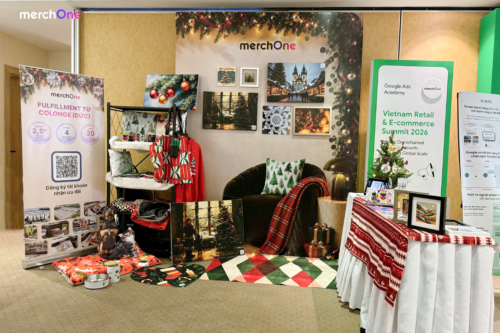
Across the sessions from Google, merchOne, and other speakers, one idea came up repeatedly: international expansion is becoming easier to start, but success still depends on much more than simply launching ads in another country.
What Stood Out From the Event
A few ideas were especially relevant for print-on-demand sellers:
- Europe is not a replacement for the US. It is an opportunity to reduce dependence on a single market and find additional demand for products that are already working.
- AI can make market discovery faster. Tools such as Google AI Max can help advertisers identify relevant searches beyond the keywords they initially provide, reducing some of the manual work involved in entering a new market.
- Good product data matters more as discovery becomes automated. Accurate titles, descriptions, attributes, images, pricing, and availability give Google and other platforms better information about what a seller actually offers.
- Localization goes beyond translation. Pricing, shipping expectations, product information, measurements, and the overall buying experience need to make sense to a local customer.
- Lower advertising costs only matter if fulfillment still works. Sellers need to look at the complete economics of an order, from customer acquisition to production and delivery.
Why POD Sellers Are Looking Beyond the US
The US remains one of the world’s most important ecommerce markets and will continue to be a core market for many print-on-demand businesses.
But it is also one of the most competitive.
For mature sellers, particularly those already running profitable campaigns, the challenge is no longer simply finding demand. It is finding additional demand without allowing customer acquisition costs to absorb an increasing share of the margin.
One of the market comparisons discussed around the event was the difference in advertising economics between the US and Western Europe.
For sellers already competing heavily in the US, markets such as the UK, Germany, and France can create another route to growth.
This does not mean rebuilding the entire business for Europe.
A more practical approach is to start with products that have already proven themselves.
If a canvas design consistently sells in the US, the next question is not necessarily, “What new product should we create?”
It may be:
Where else could this product sell?
Why the UK, Germany, and France Came Up So Often

Western Europe was one of the most interesting themes of the cross-border conversation at VRES 2026.
Combined demand from Germany, the UK, and France represents a substantial ecommerce opportunity relative to the US, while sellers may encounter different customer acquisition economics across these markets.
Each country, however, needs to be approached differently.
United Kingdom: the easiest first test for many US-focused sellers
The UK can be a relatively straightforward starting point for sellers already operating an English-language store.
There is less language friction, while the market still offers a mature ecommerce audience and strong seasonal shopping behavior.
Figures shared around the event showed that 52% of UK shoppers place an average of 3.7 orders during the Black Friday season.
For a seller with products that already perform in the US, that creates an opportunity to test whether the same designs can generate demand in another English-speaking market before committing to deeper localization elsewhere.
Germany: large demand, but localization matters more
Germany offers one of Europe’s largest ecommerce audiences and was another market highlighted during the event.
During the Black Friday period, 50% of German shoppers place an average of 3.3 orders.
The opportunity is significant, but the customer experience needs more adaptation than in the UK.
German-language product information, clear delivery expectations, local pricing, and transparent shipping all become part of conversion.
This makes Germany a good example of why international expansion cannot be treated as a simple advertising exercise.
France: another large market once the localization model is working
France adds another substantial Western European ecommerce market.
However, sellers should avoid treating translation as the entire localization strategy.
Product descriptions, promotions, pricing presentation, measurements, delivery information, and post-purchase communication all need to feel appropriate for the market.
For many sellers, France may therefore make more sense once the internal process for localization and European fulfillment has already been tested in one or two markets.
Google’s Message: AI Is Making Market Entry Less Manual
Google’s sessions at VRES 2026 added another layer to the international expansion discussion: AI is changing how advertisers find and respond to demand.
Traditionally, entering another market required a significant amount of manual research.
Advertisers had to build new keyword lists, understand how customers searched for similar products in different countries, create new ads, choose landing pages, and continuously adjust targeting.
Google’s newer AI-powered advertising tools are reducing some of that work.
AI Max for Search campaigns, for example, can expand beyond an advertiser’s existing keyword set and identify additional relevant searches using signals from keywords, creative assets, landing pages, and search intent.
That is particularly useful for print-on-demand because buyers often describe the same product in very different ways.
A seller may think of the product as a personalized canvas.
The customer may search for:
- a wedding gift for a newly married couple
- personalized wall art for parents
- a custom family portrait for the living room
- a Christmas gift for grandparents
The physical product may be similar, but the intent behind the search is different.
AI can help uncover more of these intent variations without requiring sellers to predict every query before launching a campaign.
This becomes even more valuable when entering multiple countries, where language and search behavior create another layer of complexity.
But AI Still Needs Good Product Data
Another important point from the Google discussion was that automation works best when the information behind it is clear.
As search and shopping discovery become more AI-driven, product data becomes increasingly important.
Google Merchant Center relies on information such as product titles, descriptions, images, prices, availability, categories, attributes, and shipping data to understand what a merchant sells and when a product may be relevant to a shopper.
For POD sellers, this matters because catalogs can become large very quickly.
A single design might be offered on a canvas, framed poster, mug, blanket, apparel item, or pet product. Once hundreds or thousands of combinations are involved, inconsistent product data makes it harder for both customers and platforms to understand the offer.
The takeaway from the event was not to add more keywords everywhere.
It was much simpler:
Make the product easier to understand.
Clear product data gives Google better inputs for automated discovery and gives customers better information once they arrive on the product page.
Translation Is Easier. Localization Is Still the Seller’s Job.
AI has also made language translation significantly easier than it was a few years ago.
That removes one practical barrier to market expansion, particularly for sellers moving from English-speaking markets into Germany or France.
But several conversations at the event reinforced an important distinction: translation and localization are not the same thing.
A translated product page can still feel foreign if the shipping information, measurements, pricing, promotions, and customer communication were clearly designed for another market.
AI can help sellers produce a first translation faster.
The seller still needs to decide whether the complete buying experience makes sense locally.
The merchOne Perspective: Getting the Order Is Only Half the Job

This was where merchOne’s contribution to the cross-border discussion became particularly relevant.
Advertising platforms can help sellers find customers.
But once the order is placed, a physical product still needs to be manufactured, packed, shipped, and delivered.
For print-on-demand, production happens after the sale. There is no finished inventory sitting in a warehouse waiting for every order.
That makes production and fulfillment part of the growth equation.
This is particularly important for categories such as wall art and home decor, where products can be larger and more complex to transport than smaller ecommerce items.
A lower cost per click in Europe may look attractive.
But if the product then has to travel a long international route before reaching the customer, part of that acquisition advantage can disappear through shipping cost, longer delivery distances, or additional operational complexity.
That changes the question sellers should ask.
Instead of:
Can we get cheaper traffic in Europe?
The better question is:
Can we acquire, produce, fulfill, and support the order at economics that still make the market worth scaling?
Why Local Production Matters When Expanding Into Europe
Production geography therefore becomes part of international growth strategy.
Producing closer to the end customer reduces the physical distance between manufacturing and delivery and gives sellers more options when building a multi-market fulfillment setup.
merchOne operates production facilities across Germany, Poland, Latvia, and Columbus, Ohio.
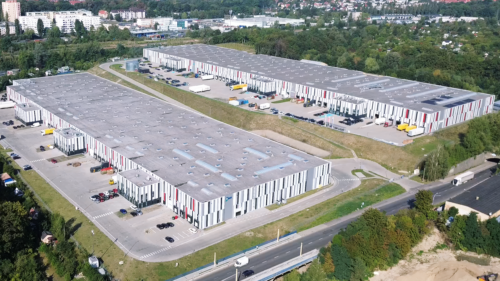
For sellers serving both the US and Europe, having production capacity across both regions can make it possible to align fulfillment more closely with where customers are located rather than depending entirely on one production geography.
This becomes more important as sellers grow.
When a business is still testing demand, the main question may be whether somebody wants the product.
Once a product becomes a bestseller, the operational questions become much more important:
- Can the same product handle significantly more order volume without creating fulfillment bottlenecks?
- Can sellers introduce the bestseller into another region without making shipping disproportionately expensive?
- Can production and delivery remain predictable during higher-volume periods such as Q4?
- Can the business expand without turning every increase in orders into an equivalent increase in customer support issues?
These questions may sound operational, but they directly affect whether a seller can continue increasing marketing spend confidently.
Why Q4 Is a Practical Time to Test Europe
Another useful takeaway from VRES 2026 was timing.
Sellers do not necessarily need to wait until they have a complete European expansion plan.
Q4 creates a useful testing window because purchase intent is already elevated around Black Friday, Cyber Monday, and Christmas.
Instead of trying to manufacture demand in a completely new market during a quiet period, sellers can test while shoppers are already actively looking for products and gifts.
The key is to keep the test controlled.
Rather than launching hundreds of products across Europe at once, start with a small group of products that already have evidence behind them:
- A bestseller that has performed consistently over time
- A design with reliable conversion rather than one short spike
- A product with healthy average order value
- A seasonal design that has already worked during previous Q4 campaigns
- A product or niche with relevance that can travel across markets
That gives the seller a much cleaner test.
If the product is already proven, the question becomes whether the market works rather than whether both the product and the market work at the same time.
A Practical Expansion Framework From VRES 2026
Putting the Google and merchOne perspectives together, a sensible European test can be relatively straightforward.

1. Start with something that already sells
Use existing order data to identify products and designs with consistent demand.
A proven product gives the seller a stronger baseline when comparing performance between markets.
2. Pick one or two markets, not all of Europe
The UK may be the easiest first step for an English-language store.
Germany or France can follow once the seller has a clearer localization workflow.
Keeping the test focused also makes it easier to understand why one market performs differently from another.
3. Make sure the product data is ready
Review titles, descriptions, product attributes, images, prices, availability, landing pages, and shipping information.
The objective is consistency and clarity rather than keyword stuffing.
4. Localize the buying experience
Translate the content, but also review pricing, measurements, promotions, shipping expectations, and customer communication.
The customer should not have to interpret a store designed for another country.
5. Let the first orders answer the question
Instead of judging a market only from clicks or ad impressions, look at what happens through the full order journey.
Compare acquisition cost, conversion, average order value, product mix, shipping cost, fulfillment performance, and repeat behavior.
6. Scale only when both marketing and fulfillment work
A low customer acquisition cost is useful only if the fulfilled order still makes commercial sense.
Once the seller has evidence that demand, conversion, production, and fulfillment are working together, increasing spend becomes a much more informed decision.
Our Biggest Takeaway From VRES 2026
Vietnam Retail & E-commerce Summit 2026 made one thing particularly clear: entering another market is becoming technically easier.
Google’s AI tools can help sellers discover more relevant demand.
Better product data can make catalogs easier for search and shopping platforms to understand.
AI translation can reduce the manual work involved in entering another language market.
But none of those tools remove the physical side of ecommerce.
The order still has to be produced and delivered.
That is why the Google and merchOne perspectives fit together so well.
AI can help sellers find new demand. Local production and fulfillment help determine whether that demand can actually scale.
For established print-on-demand sellers, this opens up a different approach to growth.
Instead of always asking what new product to launch next, sellers can look at what is already working and ask where else it could sell.
Looking Beyond the US Does Not Mean Leaving It Behind

The US will remain a major market for print-on-demand.
Expanding into Europe is not about replacing it.
It is about building additional paths to growth and reducing reliance on the advertising economics of one market.
A seller does not need to begin with a major European expansion plan.
Start with a proven product, choose one market, prepare the product data, localize the customer experience, and make sure fulfillment works.
Then let the first real orders determine what deserves to scale next.
That was one of the most useful ideas we took away from Vietnam Retail & E-commerce Summit 2026.
Turn Proven Designs Into More Products
Explore merchOne’s wall decoration, home decor, apparel, and pet products available for print-on-demand sellers across Europe and North America.