







[Webinar Recap] Selling Personalized Gifts on Amazon with AI | merchOne
Quick answer: On October 20, 2026, merchOne, Customily and Amazon Global Selling hosted the webinar “Từ lượt tìm kiếm đến đơn hàng thật: Chiến lược bán quà tặng cá nhân hóa trên Amazon cùng AI” (From Search to Real Orders: Selling Personalized Gifts on Amazon with AI). The main message: demand for personalized gifts on Amazon is still growing, but conversion is falling in many niches because listings fail to convince buyers – and AI shopping assistants – that a product is worth buying.
The two-hour session on Zoom covered the full journey of a personalized order. Trang Đài and Heidi Hạnh Nguyễn from Amazon Global Selling explained what buyers search for and how to write listings that AI can read. Henri from Customily showed how AI personalization and automated print files work with Amazon. Đông Nghi (Monic Trịnh), Marketing Lead at merchOne, closed with what happens after the sale: print-file quality, 5-star reviews and the products worth adding before Q4.
This recap summarizes information shared by the speakers during the webinar. Figures come from the speakers’ own slides and may change; Amazon programs and features are subject to Amazon’s current terms.

The Webinar at a Glance
The webinar brought together three companies that each own one step of a personalized gift order on Amazon: the marketplace (Amazon Global Selling), the personalization layer (Customily), and production and fulfillment (merchOne). It ran on October 20, 2026, from 14:00 (GMT+7), for Vietnamese sellers preparing for the Q4 peak.
| Speaker | Company | Topic |
|---|---|---|
| Trang Đài, Senior Strategic Account Manager | Amazon Global Selling | Personalized demand on Amazon and how buyers search in 2026 |
| Heidi Hạnh Nguyễn, Account Manager | Amazon Global Selling | Optimizing listings for AI shopping (GEO), with a real ASIN example |
| Henri, Customer Support Lead | Customily | AI personalization, two ways to integrate with Amazon, case studies |
| Đông Nghi (Monic Trịnh), Marketing Lead | merchOne | Print-file quality, 5-star reviews, Q4 products and production capacity |
Key Takeaways from the Webinar
- Demand is not the problem: searches for personalized and custom products on Amazon grew from January to September 2026 versus the same period in 2025, while clicks, add-to-cart and conversion fell in many niches.
- Buyers search with a formula: product + personalized + recipient + occasion, for example a custom pillow as a retirement gift for men.
- Listings are written for people and AI: title, bullets, 5 images matching 5 bullets, A+ comparison charts, FAQs and reviews are what AI shopping assistants read and quote.
- Personalization is now AI-driven: Customily turns a customer photo into styles like watercolor and generates the print file in about 3 to 20 minutes.
- Automation needs a quality gate: at 2,000 Q4 orders, a 3% error rate means about 60 unhappy gift buyers, so print files must be checked before production.
Is Demand for Personalized Gifts on Amazon Still Growing?
Yes. According to Amazon data presented by Trang Đài, searches for personalized and custom products grew in January to September 2026 compared with the same months of 2025. Yet clicks, add-to-cart rates and conversion dropped in many niches over the same period. Her conclusion was blunt: sellers are not short of buyers. They are short of listings that convince buyers.
Two forces explain the gap. Many personalized listings now look almost identical, and a large wave of new sellers has entered Amazon. Amazon itself is pushing the category: a “Personalized” filter sits in the left-hand sidebar of search results, and the category received strong placement during the Back to School season.
Demand also runs beyond Q4. Traffic for personalized products grew well in Q1 and during sales events, according to the session. Trang Đài highlighted four categories with high demand but below-average conversion. That combination is white space: buyers are searching, and current listings are not satisfying them.
Which Personalized Categories Are Growing Fastest?
Toys and kitchen products grew fastest in the data shared during the session. Wooden toys, plush toys, aprons and cutting boards grew more than 40% year over year, against the 20% Amazon considers a healthy growth rate. Hats, hoodies and sweatshirts grew more than 30%.
Amazon tracks 47 personalized product groups. Flags and banners hold the largest share of keywords, followed by T-shirts, stickers, hats and caps. Trang Đài linked the flag growth to the 250th anniversary of the United States in 2026, which drove demand for flag-themed products.
For Q4, the rising keywords include personalized family Christmas ornament, custom Christmas ornament, Halloween terms and personalized stocking. Stockings stood out: searches for personalized stockings grew by around 1,785%, according to the transcript of the session. A stocking is a small gift hung by the fireplace or door, one per family member, each with its own name.
Get the full list: the complete list of 47 personalized product groups and the keyword list are shared on request. Sellers can message Trang Đài or Heidi Hạnh Nguyễn from Amazon Global Selling directly.
How Do Amazon Buyers Search for Personalized Gifts in 2026?
Amazon buyers in 2026 search with specific, multi-part queries instead of short generic terms. In 2025, a typical search was “custom pillow.” In 2026, it combines the product, the personalization, the recipient and the occasion, such as a personalized gift for men for a retirement. Spanish-language keywords are also growing very fast on Amazon US.
That change gives sellers a clear listing formula. Trang Đài summarized it in four parts:
- A specific product: what it is, in which size and material.
- Clear personalization: what the buyer can change, such as a name, a photo or a date.
- A clear recipient and context: who the gift is for and for which occasion.
- Enough proof of value: images, video and A+ content that make the price feel fair.
A listing that covers all four matches the way buyers type. It also gives AI shopping assistants the facts they need to recommend it.
How Should Sellers Optimize Amazon Listings for AI Shopping?
Sellers should treat AI shopping assistants as a second reader of every listing, and give them complete, accurate information to quote. Heidi Hạnh Nguyễn, who has spent 3.5 years at Amazon Global Selling supporting more than 50 seller groups, called this GEO (Generative Engine Optimization). Her advice for mid-Q4: it is too late to choose new products, so focus on the listings you already sell and on conversion rate.
AI shopping is now everywhere – ChatGPT, Gemini and Meta all let people shop. Heidi argued that Amazon is the fastest place to test GEO because it holds clean buyer data close to the bottom of the funnel. On Amazon.com, the Alexa shopping assistant sits in a prominent position, answers questions and suggests products in context, for example Christmas decorations for a living room of a given size. If a listing does not state a fact, the AI has nothing to read.
Heidi grouped the GEO toolkit into two sets:
| Toolkit | Tools named in the session | What it does for AI shopping |
|---|---|---|
| Content (organic) | A+ and A+ Premium (360-degree modules, comparison charts), Manage Your Experiments, Amazon Vine (around 10 units), reviews and the “Customers say” summary | Gives AI accurate product facts and real buyer language to quote; A/B tests show which version converts |
| Advertising | Sponsored Prompts, video ads, Amazon Posts, selling alongside best-selling items and bundles | Places products inside AI-led discovery; sellers can see in their account which prompts are showing and how they perform |
According to Heidi, AI reads reviews first and the “Customers say” summary next. Both come from real buyers, which is why they carry weight.
Real Example: A Listing with 100 Sales in 6 Years
The most practical part of the webinar was a live teardown of a real listing: a glass Christmas ornament from a European seller, listed for 6 years with only about 100 units sold. The product was not the issue. The listing was.
Heidi pointed to three problems. The title packed unrelated keywords into the first 75 characters, which is the part shoppers and AI weigh most. The bullets left out size, material, recipient and whether a hanging hook was included. And there was no A+ content at all. Her fixes:
- Title and bullets: state size, material, recipient and gifting occasion.
- Images: at least 5 images, each matching one of the 5 bullets.
- Comparison chart: compare variants on the same theme, for example several raccoon designs, in A+.
- Context: show the product in use through lifestyle images and reviews, not keywords alone.
- FAQ: answer questions about breakage, outdoor use, size, occasion and recipient.
FAQs deserve extra attention. After reviews, they are one of the sources AI assistants quote most often – and unlike reviews, sellers control them fully.
How Does Customily Use AI for Personalized Products?
Customily uses AI to turn a customer’s photo or name into a finished design the customer can preview right away. Henri, Customer Support Lead at Customily, explained that photos and names are the two most common personalization elements. Previously, a customer’s photo was printed as uploaded, or a designer edited it and sent it back for approval, which took time.
Customily now converts the original photo into different styles, such as watercolor, and the customer sees the result instantly. For names, it creates lettering with effects, and customers can even write their own prompt. Around 20 popular styles are free, while trending styles use AI credits.
After the order is placed, Customily generates the print file automatically in about 3 to 20 minutes – around 5 minutes for clipart and names, longer for complex designs – and sends it to the print provider in the required format. For sellers combining merchOne and Customily, that means a personalized order can move from checkout to production without manual design work.
Two Ways to Connect Customily with Amazon
Customily offers two ways to sell personalized products on Amazon, and the right one depends on how complex the design is. Henri confirmed that sellers do not need extra approval from Amazon: an Amazon store and a Customily subscription that includes the Amazon integration are enough.
| Method | How it works | Suited to | Limitation |
|---|---|---|---|
| Post-purchase link | After buying, the customer gets an email from Customily and a message through the seller’s Amazon account, then opens a landing page with every personalization feature. The link stays live until the customer finishes, with a reminder after 24 hours. | Complex designs | Personalization happens after checkout, so the customer needs to complete one more step |
| Amazon Custom | The customer personalizes the product with the Customize button directly on the Amazon product page. | Simple designs | The Amazon preview shows only the original photo, without filters or background removal, although the print file is fully processed |
Henri also shared two case studies from sellers connected to Amazon between May and October 2026. The first, already selling on Amazon, processed around 17,000 orders, peaking at about 6,000 orders in June and holding at 3,000 to 4,000 orders per month afterwards. The second, selling to the EU, grew from about 744 to about 4,400 orders per month.
Why Print-File Quality Decides Your Next Order
A personalized order is not finished when the buyer pays. It is finished when a correct gift arrives on time and the buyer leaves a 5-star review that stays on the listing and influences the next shopper. Đông Nghi made the math concrete: with 2,000 Q4 orders and a 3% error rate, about 60 customers will complain. For a gift with the wrong name or the wrong face, a refund or reprint arrives after the occasion has passed.
AI and automation raise the stakes. When designs are generated by AI and sent to production automatically, one error repeats across every order in the pipeline. The mockup also has to match what is actually printed – a gap there turns into “not as described” complaints. Her recommendation: keep a team that checks print files before they reach the factory. Customily and merchOne can push files automatically, but sellers can also download files for their design team to review first. merchOne also offers API integration for sellers on their own platforms.
Print-File Checklist for Personalized Products
Five checks catch most print-file errors on personalized products before they reach production. Đông Nghi walked through each one with examples:
| Check | What goes wrong | How to prevent it |
|---|---|---|
| Resolution | Blurry or pixelated prints | Check the file before sending, at around 150 to 300 dpi depending on the product |
| Name spelling and font | Misspelled names; very thin fonts lose detail when printed | Proofread every name and avoid hairline fonts |
| AI art-style portraits | AI often gets hands and clothing wrong | Compare the result with the original photo |
| Contrast | Dark elements with weak separation print as solid black areas | Check light and dark separation before approving |
| Safe print area | People near the edge get cut off – missing one family member is a serious emotional error | Follow the print-area guide from the print provider |
Phone selfies need special care. They often break up when printed on large canvas. Better options are converting the photo to an art style or choosing a different material, such as an acrylic print or a metal print, and checking merchOne’s print specifications.
Which Personalized Products Should Sellers Add for Q4?
Đông Nghi suggested Q4 products that suit personalization and make good up-sells. Each one gives the buyer a reason to add a name, a photo or a date:
- Double-sided ornaments: for example, a family photo from 10 years ago on one side and today on the other.
- Pillows: options from basic to premium.
- Framed canvas: 6 frame colors, with free logo printing on the back.
- Blankets: including a softer fleece option.
- Doormats and rugs: for home decoration and under the sofa.
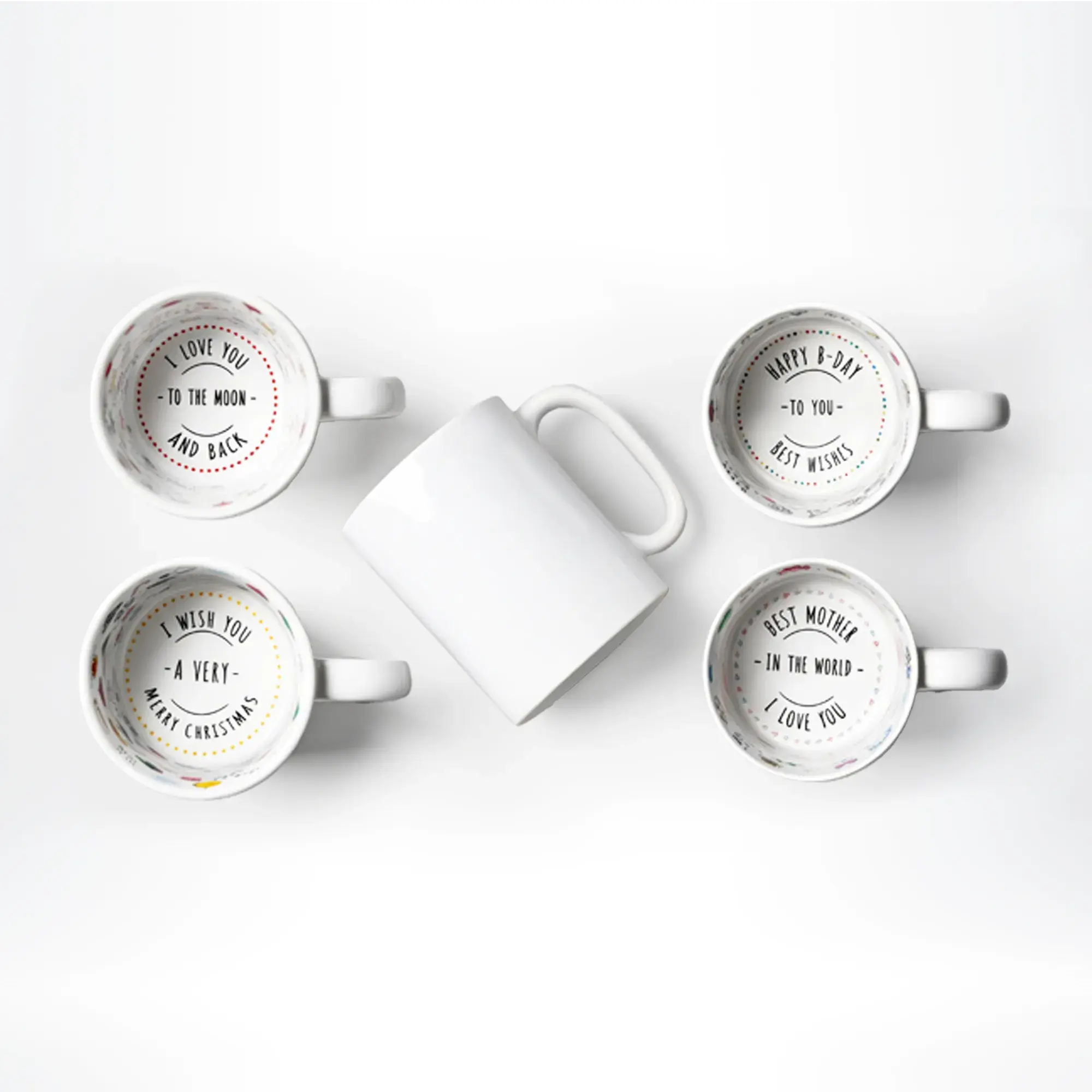
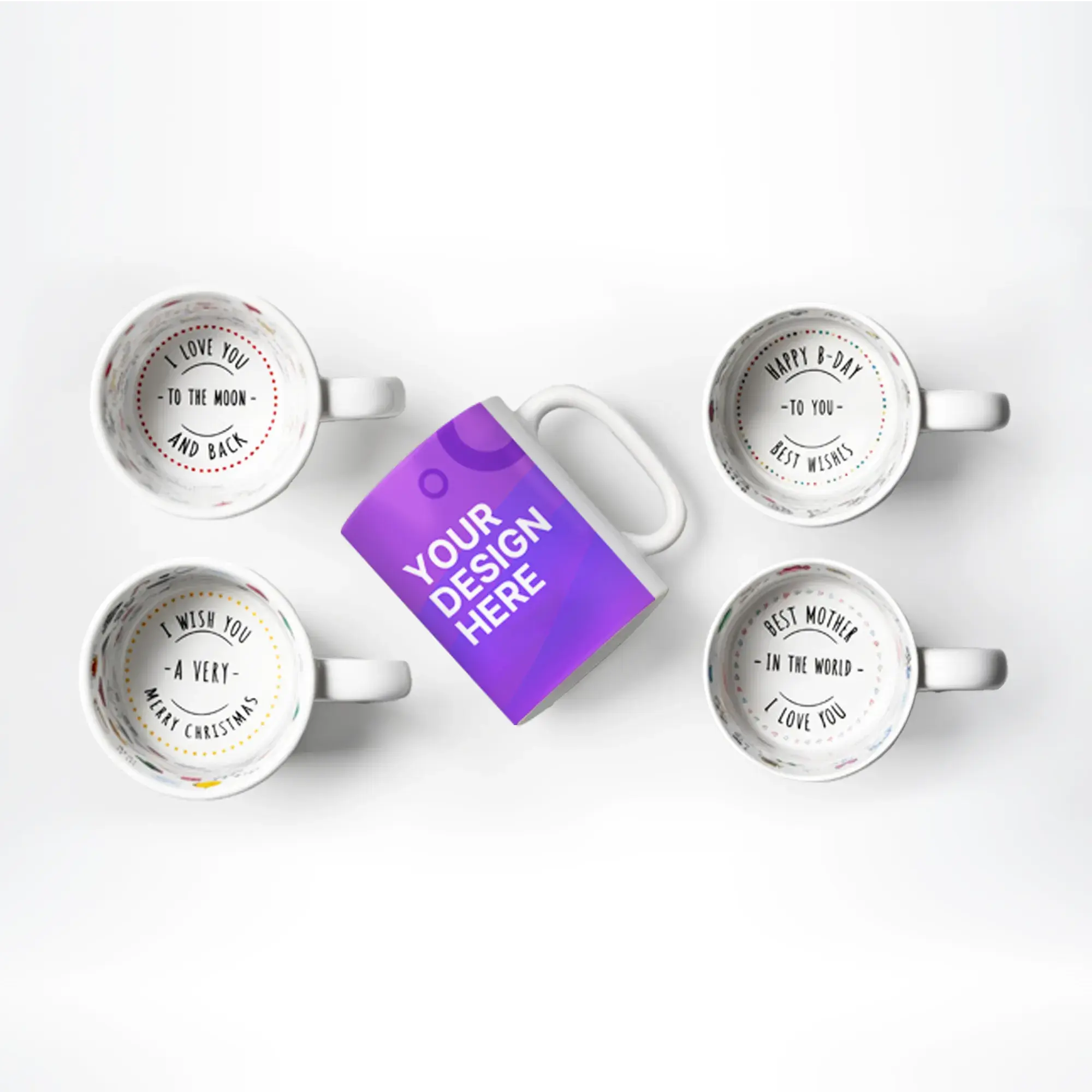
- Seasonal mugs: with a pre-printed inside design for Valentine’s Day, Mother’s Day, Christmas or Halloween (the inside is not customizable).
- Acrylic shakers and acrylic blocks: shakers come with glitter in silver, white for a snow effect, hearts for Valentine’s Day, or the three colors of the US flag.
- Peel-and-stick posters: tested so they do not peel off the wall.
Q4 Production and Cut-Off Dates
merchOne is a print-on-demand manufacturer specializing in high-quality wall art and home décor, produced in-house at four facilities – three in Europe (Latvia, Poland, and Germany) and one in the US (Columbus). merchOne owns and runs these factories, prints with HP Latex water-based inks, and uses FSC-certified wood frames from sustainably managed forests in Latvia. With capacity of 2.5M+ customized products per day and more than 20 years of experience behind it, merchOne prepares extra stock before every peak season. Sellers in Vietnam get support from a local team with documentation in Vietnamese.
For Christmas orders shipped to the US, the cut-off date depends on the product. During the webinar, Đông Nghi gave estimated cut-offs of around December 17 to 18 for canvas and December 18 for blankets. These are estimates, not commitments: dates become more precise closer to the deadline and depend on product and stock. High-volume sellers may get better cut-off arrangements, but slots are limited. Check the latest dates on the merchOne cut-off dates page.
Highlights from the Q&A
Where does Amazon’s AI shopping assistant get its information from a listing?
Heidi Hạnh Nguyễn explained that the AI reads the title, main image, bullets, reviews and the “Customers say” summary, plus signals from advertising. To be recommended for a query like “gift for a grandmother who loves gardening,” put that keyword in the title, main image and bullets, run Sponsored Products on long-tail keywords, add negative keywords, run an auto campaign, and feed the words customers use in reviews back into the listing.
How is selling Christmas gifts in the US different from the EU?
Trang Đài noted that Amazon Global Selling Vietnam currently supports North America (the US, Canada and Mexico, with Brazil more limited) and does not yet support the EU. Đông Nghi added that the EU differs by language in each country, has gift-giving holidays beyond December 25, and prefers cleaner, more understated imagery than the US. Copying US ads to the EU directly tends to perform poorly.
Are Customily emails sent by Amazon or by Customily?
Henri confirmed the email comes from Customily, and a message is sent at the same time through the seller’s Amazon account.
Webinar Offers for Sellers
Customily announced an offer for webinar attendees: existing Customily accounts get an extra 30 days, and new accounts get 45 days, with 1-on-1 support from account setup to the first order on Amazon. The slides from merchOne and Customily were sent to attendees by email. For the detailed cut-off calendar and product documents, sellers can message the merchOne Vietnam fan page or contact the merchOne sales team.
Related Guides on merchOne
- The merchOne + Customily guide for setting up personalized products end to end
- Best personalization options for merchOne products for choosing what buyers can customize
- Christmas wall art trends for planning Q4 designs
- Print-on-demand calendar of key dates for gift occasions beyond Q4
- Beyond Borders 2026 recap for how AI is changing POD buying in the EU and US
Frequently Asked Questions
What was the merchOne x Customily x Amazon Global Selling webinar about?
The webinar, held on Zoom on October 20, 2026, covered how to sell personalized gifts on Amazon with AI. Amazon Global Selling shared personalized demand data and listing optimization for AI shopping, Customily showed AI personalization and its Amazon integrations, and merchOne explained print-file quality checks, Q4 products and production capacity for the peak season.
Is demand for personalized products on Amazon still growing?
Yes. According to Amazon Global Selling, searches for personalized and custom products grew from January to September 2026 compared with 2025. However, clicks, add-to-cart and conversion fell in many niches, because many listings look alike and new sellers keep entering. Listings with clear product details, personalization, recipient and occasion convert better.
What do AI shopping assistants read in an Amazon listing?
AI shopping assistants read the title, main image, bullets, A+ content, FAQs, reviews and review summaries, along with advertising signals. Listings should state size, material, recipient and occasion, use at least 5 images that match 5 bullets, and answer common buyer questions. Without that information, the AI has nothing to recommend the product with.
Do sellers need Amazon approval to use Customily?
No. According to Customily, sellers only need an Amazon store and a Customily subscription that includes the Amazon integration. Customily connects either through a post-purchase link, which suits complex designs, or through Amazon Custom, where buyers personalize the product directly on the Amazon product page, which suits simpler designs.
What should sellers check in a personalized print file?
Check five things before a file goes to production: resolution (around 150 to 300 dpi depending on the product), name spelling and font thickness, accuracy of AI art-style portraits, contrast between dark elements, and the safe print area so no one is cut off at the edge. Phone selfies are not recommended for large canvas prints.
When is the merchOne Christmas cut-off for US orders?
Cut-off dates depend on the product. In the webinar, merchOne gave estimates of around December 17 to 18 for canvas and December 18 for blankets. These are estimates, not guarantees, and they depend on product and stock. Sellers should check the merchOne cut-off dates page for the latest schedule.
Personalized Gifts, Produced In-House for Q4
Sell personalized wall art and home décor on Amazon, made in-house at four factories in Latvia, Poland, Germany, and Columbus. Connect Customily and your store through merchOne integrations.
Create your free merchOne account and get your listings ready before the Christmas cut-off.