

Home Decor Trends 2026: 5 Aesthetics Sellers Should Print
Quick answer: The five home decor aesthetics driving purchases right now are Heritage Americana, Neo Deco, tactile natural materials, unexpected color statements, and the “collected” personal home. Each one is easy to copy and hard to execute, because heritage plaid, Deco linework, and saturated purple all fail visibly at print stage. Sellers capture premium pricing by pairing trend-accurate designs with in-house production, which is why print-on-demand canvas quality decides whether a trend window turns into margin or returns.
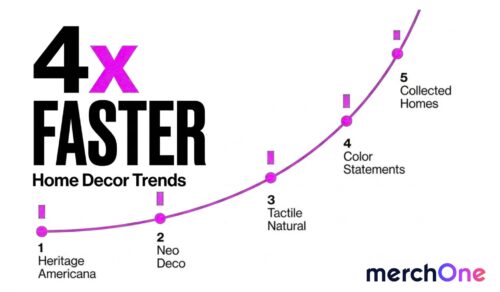
Home decor trends now move faster than most sellers can react. Pinterest data shows aesthetics evolving roughly four times faster than they did seven years ago, which compresses each trend into a short, intense demand window. Sellers who execute accurately inside that window sell at premium prices. Sellers who ship generic or poorly printed versions arrive late and compete on price.
This guide breaks down the five aesthetics buyers are spending on, the strategic move for each, and the three behavioral shifts underneath them. It closes with the production decision that determines whether any of it becomes profit.
Key Takeaways
- Trend windows are shorter. Pinterest reports aesthetics shifting about four times faster than seven years ago — collections need to launch in weeks, not seasons.
- Heritage Americana is the volume play. Ralph Lauren Christmas searches rose 5,900% year over year, and plaid and tartan reward crisp pattern reproduction above everything else.
- Neo Deco is the margin play. Up 210% year over year, built on sharp geometry that blurs immediately on low-resolution production.
- Color is the fastest test. Purple Christmas decor jumped 511% year over year, and research attributes roughly 85% of purchase reasoning to color.
- Personalization has an execution gap. 71% of consumers expect personalized interactions, but only about 35% of companies deliver it at scale.
- AI discovery reads data, not design. Stores with near-complete attribute records see 3 to 4 times higher visibility in AI recommendations.
- Production is the moat. Design files spread in weeks. Print consistency does not.
Why Home Decor Trends Move Faster Now
Trend velocity in home decor is now a production problem, not a design problem. Pinterest data shows aesthetics evolving about four times faster than seven years ago, which means a look can peak and fade inside a single quarter. Etsy, Amazon, and TikTok Shop all amplify the same visual signals at the same time, so thousands of sellers see a trend within days of each other.
The design advantage disappears almost immediately. What remains is speed to market and print fidelity.
That is why the sellers who win short windows tend to build small coordinated collections on proven substrates — framed canvas, posters, pillows, blankets — instead of scattered one-off products. A tight collection lets buyers layer a room, and layering is what lifts average order value during a trend spike.
Trend 1: Heritage Americana Home Decor
Heritage Americana is the highest-volume aesthetic of the current cycle: plaid, tartan, equestrian motifs, and old-money holiday styling across pillows, throws, wall art, and table decor. Ralph Lauren Christmas searches surged 5,900% year over year (Pinterest, 2026), and the look travels easily from wall to sofa to table.
Heritage aesthetics live or die on print fidelity. A tartan with muddy color separation reads as cheap before a buyer finishes scrolling.
The strategic move is a coordinated collection of 10 to 15 designs that share a palette, so one buyer can furnish a room from a single store. Set crisp pattern reproduction as your quality bar and test on both premium pillows and wall pieces before scaling, since woven-look patterns behave differently on textile than on canvas.
Trend 2: Neo Deco Wall Art
Neo Deco climbed 210% year over year (Pinterest, 2026): geometric symmetry, arches, brass and jewel tones, bold structured patterns. It is the strongest premium-pricing aesthetic on this list because it reads as designed rather than decorated.
It is also the least forgiving. Deco depends on fine linework and precise geometry, and a line that blurs at print stage destroys the entire effect.
Position Deco pieces as statement items, not fillers. Large formats carry the geometry better than small ones, which is one reason oversized wall art keeps outperforming — a pattern covered in the large wall art trend guide. Order test prints on metal prints and acrylic prints before committing a full collection, because reflective substrates change how metallics and jewel tones land.
Trend 3: Tactile Natural Materials
Buyers are shopping for texture. Merino wool blanket demand grew 205% year over year (Pinterest, 2026), driven by a preference for warmth and materials that feel honest rather than engineered.
This is the one trend where the product page matters as much as the design. Buyers in this segment read material specs before they buy.
Write material detail directly into titles, bullets, and attribute fields — fiber, weight, weave, dimensions. Pair textile products with designs that reinforce the tactile story, such as botanical illustration or hand-drawn line work, and keep the palette natural. A premium blanket with a botanical print and complete material data converts better than the same blanket with a generic title, because the buyer is validating a material decision, not an aesthetic one.
Trend 4: Bold Seasonal Color, Led by Purple
Seasonal color defaults are breaking. Purple Christmas decor jumped 511% year over year (Pinterest, 2026) as buyers began treating holiday decor as self-expression rather than tradition. Research attributes roughly 85% of the reason consumers pick one product over another to color alone.
Color is also the cheapest test you can run. Instead of designing new products, release trend-forward colorways of designs that already sell.
A proven design in an emerging color launches faster and carries lower risk than a new concept. The constraint is production accuracy: a purple that ships as washed-out lavender generates returns and one-star reviews, and no amount of listing optimization recovers from that. Check color-critical designs on posters first — they are the fastest and lowest-cost way to confirm a colorway before it reaches framed or textile products.
Note: merchOne prints wall art and home décor on fade-resistant HP Latex water-based inks, which is what keeps saturated colorways like deep purple and jewel-tone Deco consistent from the first unit to the thousandth.
Trend 5: The Collected Home
Stark minimalism is losing ground. Shopify reports that customers increasingly build spaces that feel collected over time rather than curated all at once, which changes how decor should be sold: as an addition, not a makeover.
A collected home is never finished. That is the commercial point.
Write product descriptions that reference how a piece sits alongside what a buyer already owns — the frame color next to existing furniture, the pillow that works with a sofa they are not replacing. This framing supports repeat purchase, and repeat purchase is where print-on-demand margin actually compounds. It also pairs naturally with personalization, covered in the personalized home decor gift guide, because a named or dated piece is the one item in a room that cannot be swapped out.
Shift 1: Visual Search Replaces Keywords
Visual discovery is now a primary channel for home decor. Around 36% of consumers report having run a visual search, and decor sits at the center of that behavior because keyword descriptions poorly represent visual products. Amazon’s visual search test produced a 2% click-through lift, which at its volume translated to roughly 32,000 additional purchases per day.
The practical consequence is blunt: your images are your search strategy.
High-resolution photography of high-resolution prints gets matched by visual discovery systems. Blurry, inconsistent, or over-mocked imagery gets skipped. Photograph a real printed unit whenever possible, keep lighting and crop consistent across a collection, and show scale in a room context — visual systems and buyers both use surrounding objects to judge size.
Shift 2: The Personalization Premium
Personalization has moved from differentiator to baseline. Roughly 71% of consumers expect personalized interactions and 76% report frustration when they do not get them, while companies executing personalization well generate about 40% more revenue than average performers. Around 78% of consumers now abandon brands that fail to personalize within the first two digital touchpoints, up from 71% a year earlier.
Here is the part most sellers miss. Only about 35% of companies achieve personalization at scale, against near-universal intent among enterprise leaders.
That gap is the opening for independent sellers. Custom names, dates, coordinates, and colorway variants justify premium pricing precisely because most of the market cannot render them cleanly on every unit. Tools like Customily and Teeinblue handle the buyer-facing configuration; the personalization options guide covers which product types absorb it best.
Shift 3: AI Search Rewards Product Data
Roughly 64% of shoppers now use AI tools to find or research products, AI-driven referrals to e-commerce sites grew about 109% during 2025, and buyers who engage with AI recommendations spend around 29% more per session. Those recommendations are built on structured data, not visual appeal.
AI cannot see your photography or your copy. It reads attributes.
Stores with near-complete attribute records see 3 to 4 times higher visibility in AI recommendations than stores with sparse data, and recommendations built on stale or incorrect records miss by 30 to 40%. The difference between being the first suggestion and the eighth is usually data completeness rather than product quality. Complete material, color, style, dimensions, and room type on every listing; state both the product and the aesthetic it belongs to in the title; and keep fulfillment data accurate by syncing through the available integrations rather than maintaining listings by hand.
Which Trend Fits Which Product
Trend selection should follow substrate strengths, not design preference. Heritage patterns need pattern fidelity, Deco needs line precision, natural materials need textile quality, and color statements need ink accuracy.
| Trend | Reported growth | Best-fit products | Quality risk if production is weak |
|---|---|---|---|
| Heritage Americana | 5,900% (Ralph Lauren Christmas searches) | Pillows, blankets, framed canvas, posters | Muddy pattern separation in plaid and tartan |
| Neo Deco | 210% | Metal prints, acrylic prints, large canvas | Blurred linework and broken symmetry |
| Tactile natural materials | 205% (merino wool blankets) | Premium blankets, pillow covers, tote bags | Flat texture rendering, weak fabric feel |
| Unexpected color | 511% (purple holiday decor) | Posters, canvas, mugs | Washed-out or shifted colorways |
| Collected personal home | Sustained shift (Shopify) | Personalized canvas, framed posters, puzzles | Inconsistent output across repeat orders |
Why Print Quality Decides Your Margin
Every trend on this list converges on one decision. Trends create demand, personalization and AI route the buyer to you, and production quality determines whether that sale builds your brand or damages it.
Generic overseas fulfillment pulls sellers into a familiar pattern: long transit times, output that varies between batches, and price competition against thousands of near-identical listings. Reviews slip, margins compress, and repeat purchase disappears.
In-house, high-resolution production reverses the sequence. Sharper products photograph better, better photography feeds visual discovery, and consistent fulfillment data strengthens the structured records AI systems read. Quality compounds across every channel at once — which is the opposite of how a price-led strategy behaves. Delivery speed belongs in the same calculation, so check current shipping times and destinations before you promise a trend-window delivery date.
How merchOne Prints These Trends
merchOne is a print-on-demand manufacturer specializing in high-quality wall art and home décor, produced in-house at four facilities merchOne owns and runs — three in Europe (Latvia, Poland, and Germany) and one in the US (Columbus). Wall art and home décor are made with fade-resistant HP Latex water-based inks and FSC-certified wood frames, with timber from sustainably managed forests in Latvia.
That setup is why the tartan prints sharp, the Deco linework stays crisp, and the purple ships as the purple your buyer saw on screen.
Operationally, merchOne runs 30,000 m² of production space with 2.5 million units of daily capacity, targeting 95% on-time shipping — 2 business days for unframed canvas and posters, 3 business days for other products. Sellers connect through a Shopify app or REST API directly, or route orders from Amazon, Etsy, eBay, WooCommerce, and 30+ other e-commerce platforms through Order Desk. Apparel and pet products complete the catalog with high-quality fabrics, durable materials, and precise print finishing.
What to Do This Week
The trend windows are open now and they close faster every year. Five moves, in order of impact.
- Pick two trends from the five above that match your existing design strengths — not all five.
- Build one small coordinated collection of 10 to 15 designs instead of scattered singles, using the product catalog to choose substrates that suit the aesthetic.
- Audit product data and complete every attribute on your top 20 listings: material, color, style, dimensions, room type.
- Add personalization to your best sellers, since the 35% execution rate means most competitors will not.
- Order test prints before scaling, and time launches against the print-on-demand sales calendar.
Related Guides on merchOne
- Best wall art niches — for choosing a niche before you commit to a collection.
- Seasonal print-on-demand niches — for planning trend windows across the year.
- Christmas wall art trends — for holiday aesthetics and high-season timing.
- Scaling with personalized framed canvas — for turning personalization into repeat revenue.
- On-demand canvas prints — for canvas formats, sizing, and product setup.
- Wall art or apparel — for comparing category margin with data.
Frequently Asked Questions
Which home decor trend should new sellers start with?
Unexpected color statements are the lowest-risk entry point. Instead of creating new designs, release trend-forward colorways of designs that already sell, which shortens launch time and limits downside. Heritage Americana is the next step up because it sells across pillows, blankets, and wall art, letting one buyer purchase several coordinated pieces from the same store in a single order.
How long do home decor trends last?
Most current aesthetics run for a single season or quarter, since Pinterest data shows trends evolving about four times faster than seven years ago. Practically, that means designs need to be listed within weeks of a trend surfacing, not months. Sellers who wait for confirmation usually launch into a saturated window and end up competing on price rather than aesthetic accuracy.
Why does print quality matter for these trends?
Each of these aesthetics has a visible failure mode. Tartan loses definition when color separation is imprecise, Neo Deco loses its geometry when fine lines blur, and statement colorways lose their appeal when a saturated purple prints as pale lavender. merchOne produces wall art and home décor in-house on fade-resistant HP Latex water-based inks, which keeps output consistent across repeat orders.
What product data do AI shopping tools use?
Structured attributes: material, color, style, dimensions, room type, and category. Stores with near-complete attribute records see 3 to 4 times higher visibility in AI recommendations than stores with sparse data, and stale records reduce recommendation accuracy by 30 to 40%. Photography and marketing copy do not influence these systems directly, so completing attribute fields on top listings is the highest-return data task available.
Is personalized home decor worth the extra cost?
Yes, and the reason is the execution gap. About 71% of consumers expect personalized experiences while only around 35% of companies deliver personalization at scale, which leaves room for independent sellers to charge premium prices. Names, dates, coordinates, and custom colorways work particularly well on canvas, framed posters, and pillows, provided fine detail renders cleanly on every unit.
How fast do merchOne trend products ship?
merchOne targets 95% on-time shipping, with 2 business days production for unframed canvas and posters and 3 business days for other products, across four facilities in Latvia, Poland, Germany, and Columbus (US). US-bound orders are produced in Columbus, which shortens transit for North American buyers — a practical advantage when a trend window is only a few weeks wide.
Turn the next trend window into margin
Pick two trends, build one coordinated collection, and back it with production that renders plaid, Deco linework, and saturated color the way your buyer saw them. Browse the wall décor range and home décor accessories to choose your substrates.
Create a free merchOne account, upload a design, and order a test print this week.